13th May 2010
We had booked our tuk-tuk driver from the other day to pick us up again at 10am this morning, and true to his word he was outside waiting for us. Our first stop today was the Tuol Sleng Musuem, also know as S-21. In 1975 Tuol Svay Prey High School was taken over by Pol Pot’s security forces and turned into a prison known as Security Prison 21. This soon became the largest centre of detention and torture in the country. Between 1975 and 1978 more than 17,000 people held at S-21 were taken to the killing fields of Choeng Ek, which we had visited yesterday.
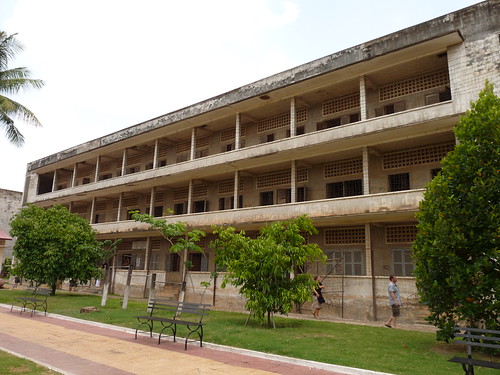
When you walk into the museum site it looks just like an old school complex, with run down buildings arranged around a central courtyard. In the first building we entered the classrooms were still their original size, although the only furniture in each room was a single metal framed bed, usually accompanied by some leg irons or other restraining device. On one of the walls in each room was a picture showing the room as the Vietnamese army found it when they liberated Phnom Penh in early 1979. These were the cells where the last fourteen people had been tortured to death as the Vietnamese closed in on the city. The photographs showed their gruesome deaths in the rooms where their decomposing corpses were found. These fourteen are now buried in the courtyard outside.
Only seven people were found alive when the Vietnamese reached S-21. These people had used skills such as painting or photography in order to stay alive.
The next building we went into featured room after room of harrowing black and white photographs of the men, women and children that had passed through S-21. Virtually all of these people would have later been killed.
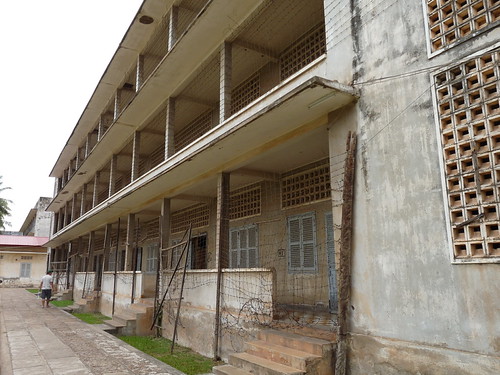
Across the courtyard there are another two blocks. The first of these was were prisoners were kept. The ground floor had small cells built out of bricks, the 1st floor had equally small cells, but these built out of wood, and on the 2nd floor was the mass holding room, where prisoners were chained together in large numbers. The front of this building was covered by sheets of barbed wire. This was put in place to prevent prisoners jumping from the higher floors to commit suicide.
The final building contained instuments of torture used by the interrogators, alongside paintings of the prisoners being tortured, by former Tuol Sleng inmate and painter Vann Nath.
An entire floor in one of the buildings was dedicated to an exhibition giving detailed information about the three years, eight months and 20 days of the Khmer Rouge’s rule. We spent a great deal of time reading the boards about the history of what happened here and it seems that even before the genocide of the population, the Khmer Rouge were set on a strict regime of detatching the Cambodian people from everything in order to create an agrarian utopia and a classless, self-sufficient society. They closed schools, hospitals and temples and the population was forced to leave the cities and go to work in the fields. They were effectively slave labour in the production of rice. Currency was abolished and meals consisted of a watery porridge. Not only did people die at the killing fields, many more died of disease and exhaustion in the fields. Even the sick from the hospitals were forced to walk miles to work in the fields with many dying en route.
One of the most poignant scripts was a poem called The New Regime, written by Sarith Pou, which pretty much sums up the situation:
No religious rituals. No religious symbols. No fortune tellers. No traditional healers. No paying respect to elders. No social status. No titles.
No education. No training. No school. No learning. No books. No library. No science. No technology. No pens. No paper.
No currency. No bartering. No buying. No selling. No begging. No giving. No purses. No wallets.
No human rights. No liberty. No courts. No judges. No laws. No attorneys.
No communications. No public transportation. No private transportation. No traveling. No mailing. No inviting. No visiting. No faxes. No telephones.
No social gatherings. No chitchatting. No jokes. No laughter. No music. No dancing.
No romance. No flirting. No fornication. No dating. No wet dreaming. No masturbating. No naked sleepers. No bathers. No nakedness in showers. No love songs. No love letters. No affection.
No marrying. No divorcing. No marital conflicts. No fighting. No profanity. No cursing.
No shoes. No sandals. No toothbrushes. No razors. No combs. No mirrors. No lotion. No make up. No long hair. No braids. No jewelry. No soap. No detergent. No shampoo. No knitting. No embroidering. No colored clothes, except black. No styles, except pajamas. No wine. No palm sap hooch. No lighters. No cigarettes. No morning coffee. No afternoon tea. No snacks. No desserts. No breakfast [sometimes no dinner].
No mercy. No forgiveness. No regret. No remorse. No second chances. No excuses. No complaints. No grievances. No help. No favors. No eyeglasses. No dental treatment. No vaccines. No medicines. No disabilities. No social diseases. No tuberculosis. No leprosy.
No kites. No marbles. No rubber bands. No cookies. No popsicle. No candy. No playing. No toys. No lullabies. No rest. No vacations. No holidays. No weekends. No games. No sports. No staying up late. No newspapers.
No radio. No TV. No drawing. No painting. No pets. No pictures. No electricity. No lamp oil. No clocks. No watches.
No hope. No life. A third of the people didn’t survive. The regime died.
It made me so angry that these people could continue to plunder their country and population in this way while at the same time enjoying a seat on the UN council. They also contravened the Geneva Conventions by taking Vietnamese prisoners from across the border and executing them without trial, yet still nothing was done. When Vietnam finally invaded and put an end to the Khmer Rouge, that country was penalized by sanctions, but you wonder where it would have ended had they not stepped in.
Visiting Tuol Sleng is a depressing experience. It is the sheer ordinariness of the place which makes it even more horrific, the plain school buildings on a suburban street alongside rusted beds and instruments of torture. It is not a pleasant place to visit, but if you are in Phnomn Penh I think it is important to in order to better understand the history of this country.
A few jobs followed, getting our tuk-tuk driver to take us back to Russian market, the post office and the supermarket, before returning to the hotel some lunch and a quiet afternoon. Early evening arrived and our reliable driver took us to the Foreign Correspondent’s Club, just in time for happy hour! A couple of drinks followed sat overlooking the Tonle Sap River.
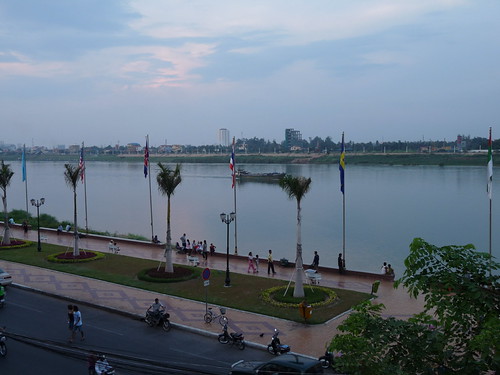
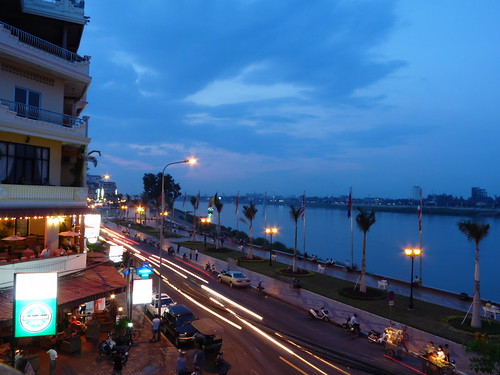
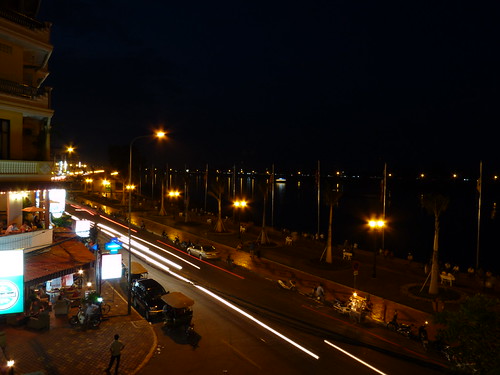
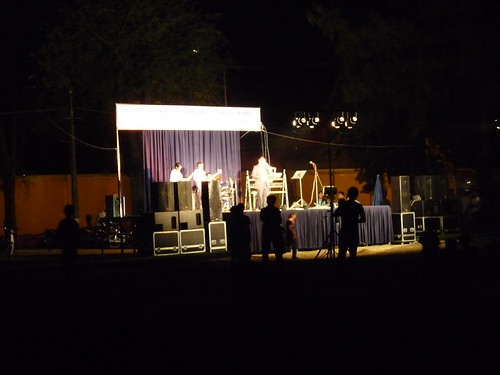
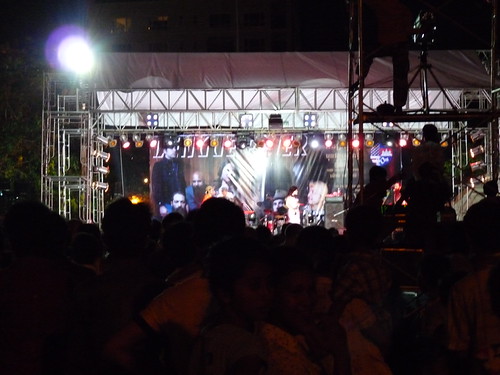
After dinner we walked back to the hotel passing through a couple of park areas which were thronging with people. This weekend is a long holiday weekend for the Cambodians in celebration of the King’s birthday. There were a couple of stages set up with bands playing.
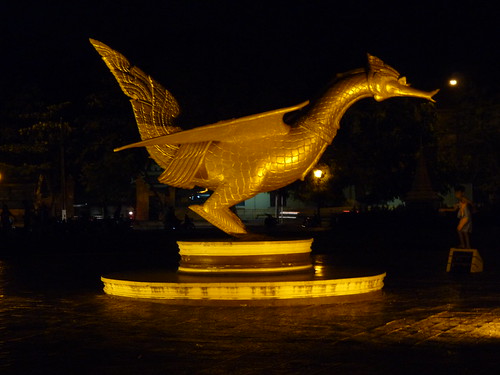
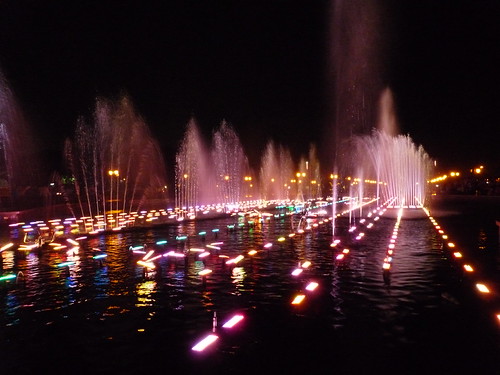
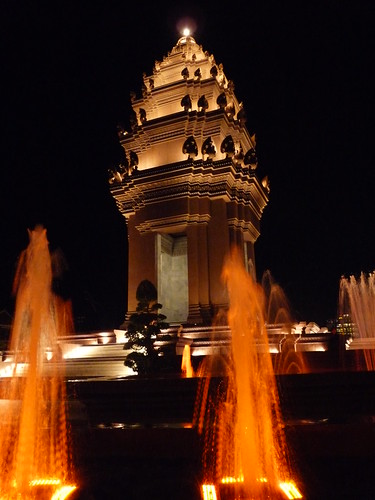
Also in the park was a colourful fountain, synchonized to music. Not quite the Bellagio fountains, but quite impressive none the less.