25th April 2010
Our first proper day in Hoi An. Hoi An has been a UNESCO world heritage site since 1999 as a well-preserved example of a Southeast Asian trading port of the 15th to 19th centuries, with buildings that display a unique blend of local and foreign influences. Its pride and joy is the distinctive architecture of the Old Town with its well preserved houses and narrow, wonderfully car-free streets. Hoi An is also famous for its tailors with shop after shop displaying examples of their work in materials ranging from silk to linen and wool. There are anywhere between 300 and 500 tailors in a town about the size of Basingstoke, so competition for customers is quite fierce with people calling out to you as you walk down the street.
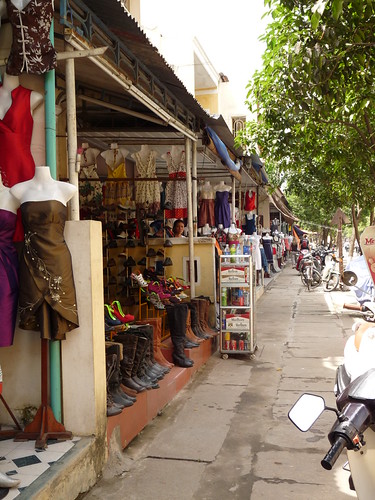
Ed decided that he would like another pair of combats the same as the ones he had bought in the UK and has lived in for the past 8 months. We wandered along one of the tailor streets, studiously avoiding any that called out to us (too scary) until we came to a tailor with a pair of combats on display. This seemed as good a place as any and the combats on display had the zip off legs like Ed’s so they obviously knew what they were doing. We asked for a price and how long - the equivalent of £15 and they would be ready in 6 hours. Amazing, so we agreed and left the Craghoppers combats with them.
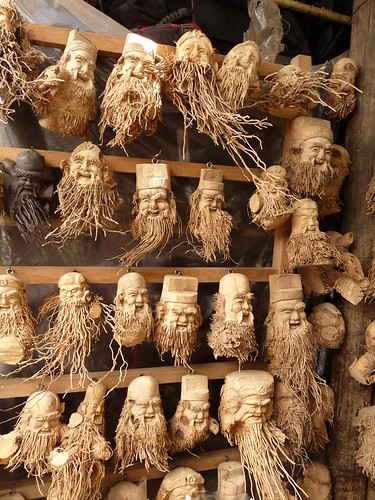
We spent the next few hours just soaking up the atmosphere in the old town and admiring the many beautiful things they have for sale here, silk lanterns, pretty dresses, jewelery and of course the ubiquitous t-shirts. It was great to wander through the quiet streets, away from the traffic.
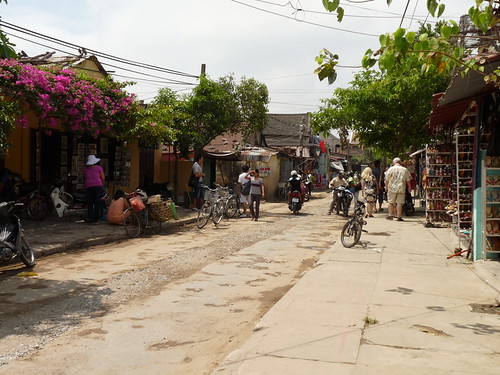
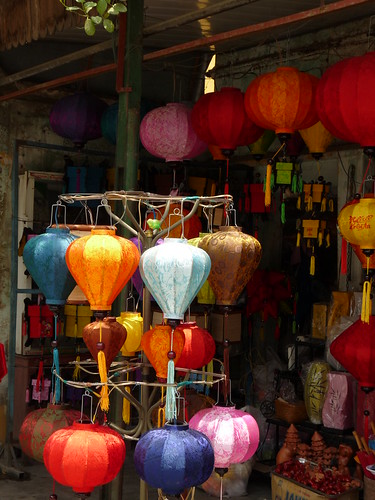
We decided to follow the walking tour in the Lonely Planet, which is often a good way of getting our bearings.
Our starting point was the Tran Family Chapel where we were given a talk on the history of the building by a family member descended from the Mandarin who had originally built it in 1802. The chapel was used for worshipping deceased family members and in front of the alter were large central doors. These are only opened at Vietnamese New Year (Tet) and the anniversay of the death of the Mandarin who built the chapel. The alter itself contained wooden boxes inside of which are tablets containing a biography of the persons life. As we walked through the chapel which features elements of Chinese, Japanese and Vietnamese architecture, we moved from the worshipping area to the living area and finally to a small garden out the back. Here the placentas of new-born babies were buried. The practice was meant to prevent fighting between children and to provide a solid link back to their family home for any that moved away.
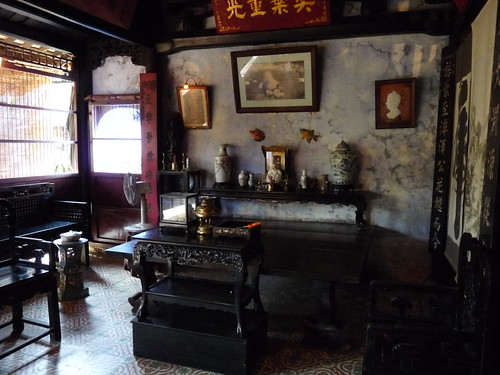
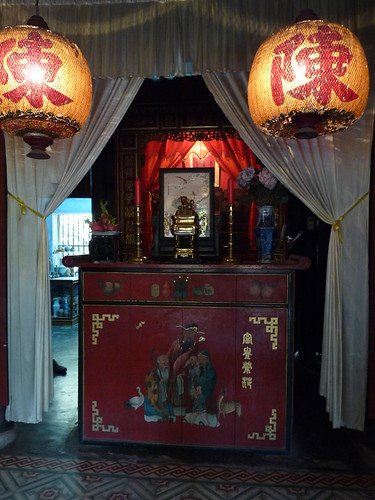
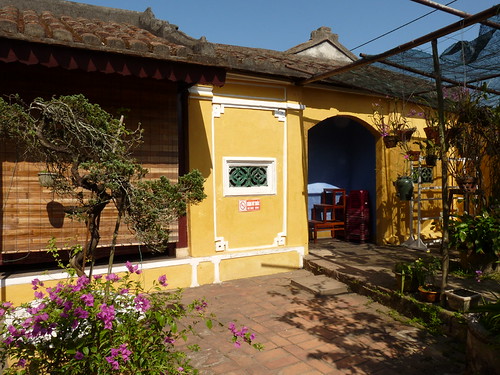
The next stop was the Museum of Trading Ceramics. This was a small museum in one of the first old houses to undergo restoration and it was more for the building itself than the actual exhibits that we wanted to visit. It was made of beautiful dark wood with a central courtyard separating the front and back of the house.
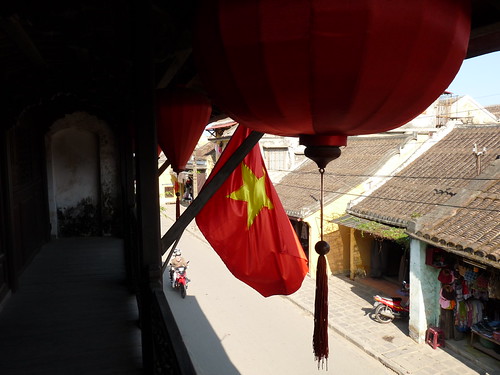
The Assembly Halls built by Chinese immigrants in order to identify their province of origin are another peice of the well-preserved architecture here in Hoi An. Each community built their own hall for celebrations, social gatherings and meetings. There are several in the town, but we chose to visit the Assembly Hall of the Fuijian Chinese Congregation.
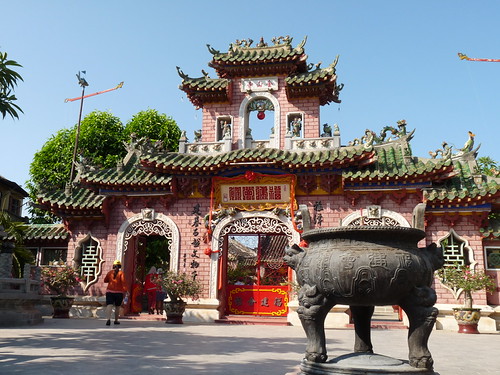
This began life as a traditional Assembly Hall, but later became a temple for worshipping a god from the Fuijian Province. It was pretty spectacular to see the massive prayer coils hanging from the ceiling on entering the main building. We wondered how long they would take to fully burn having never seen ones that were quite so big.
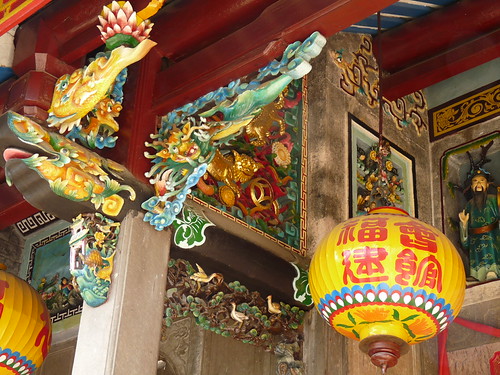
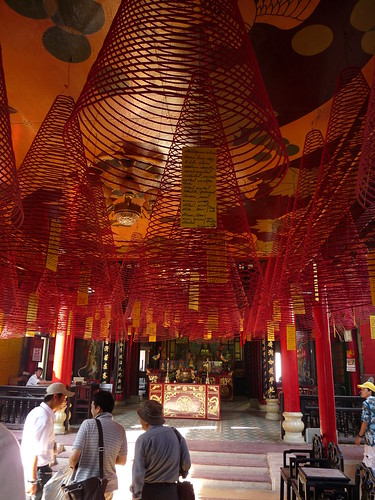
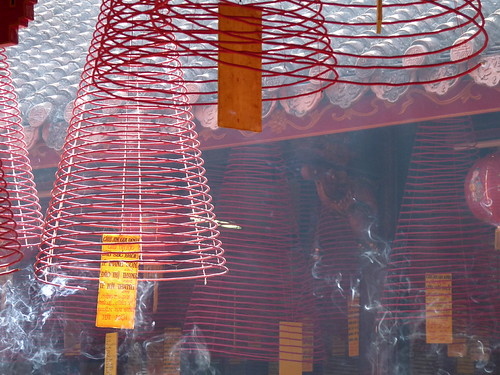
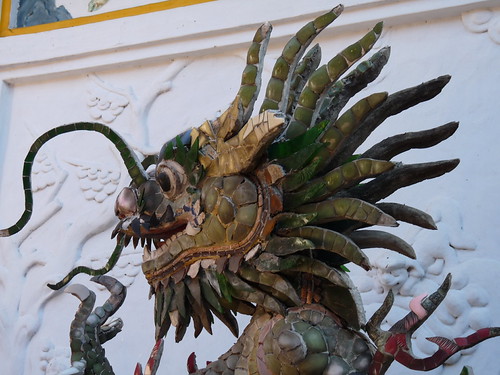
Of course we couldn’t do a walking tour without stopping at least one temple visit. We decided on Quan Cong Temple. This small temple is dedicated to Quan Cong, a highly esteemed Chinese general who is worshipped as a symbol of loyalty, sincerity, integrity and justice.
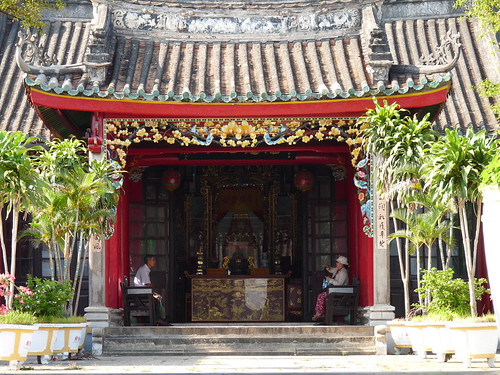
Our walking tour over, we headed back to the tailor shop where the shuttle bus to the hotel goes from. On our way we passed a shop called ‘Reaching Out’. This had been mentioned in the Lonely Planet so we went inside for a look around. This organisation is run by a disabled gentleman who hires disabled workers who first receive training in new craftmanship skills, then start work in the comfortable workshop behind the shop. Normally, you can wander through and watch them at work, but since it was Sunday, they weren’t working. The shop is also run on a fair-trade basis and profits go back into expanding the business. There are 9 million disabled people in Vietnam, a country with no social security and they have few prospects, so this is a very worthwhile project.
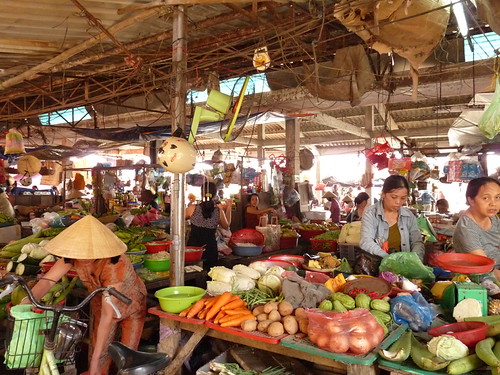
We also walked through the central market area, a very busy, thriving market selling everything from fruit and veg to souvenirs, with the obligatory ‘buy from me’ call ringing in our ears as we politely shook our heads and moved on. I’m starting to wish we were both fluent in Welsh - that would confuse them! As it is I have to content myself with answering in Welsh from time to time.