
22nd April 2010
This morning we’d arranged to go on a guided trek to a couple of hill tribe villages with the Israeli couple we’d met yesterday, who were also staying at our hotel. We had read good things about the trek which the hotel ran, so they had booked the trek for us. At 9am our guide Chi was there ready to take us out. Chi is from the Black H’mong tribe and lives in one of the local villages. She has been giving guided treks for the hotel for about five years and despite never having attended school had an excellent level of English.
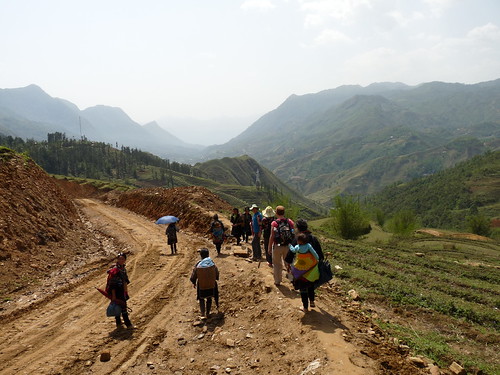
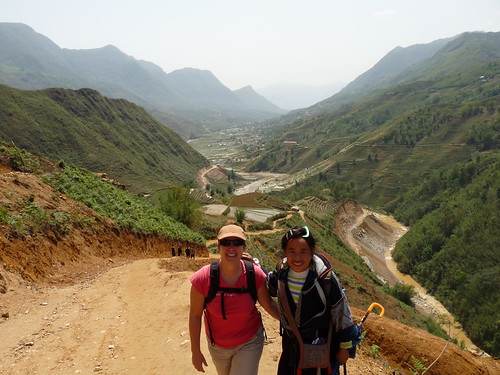
The trek started with a short minibus ride, which took us a few kilometres down the road, where we would begin our walk. As is usual in Sapa, we weren’t on our own. As soon as we started walking we were joined by another 5 or 6 Black H’mong women, some with babies on their backs, who just followed us, chatting and asking us our names, fortunately not (yet) trying to sell us anything. Although I don’t think any of us were in any doubt that this would change at some point. Chi said that they always follow her because she has tourists with her.
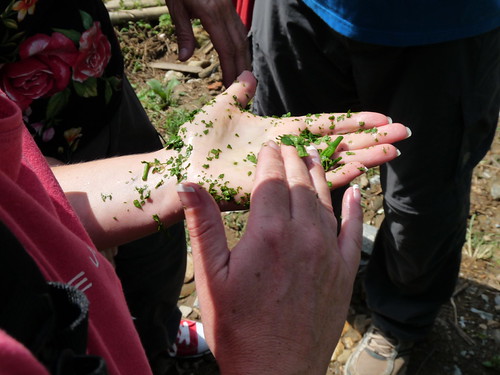
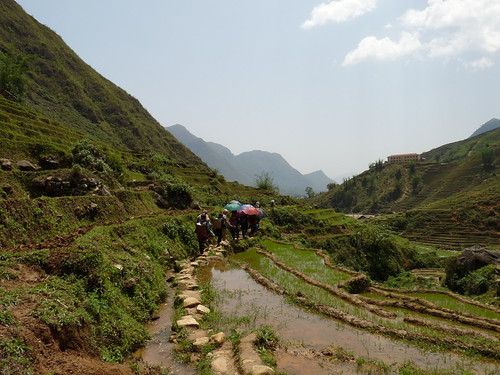
The path down into the valley was quite uneven and steep. We stopped at a small clump of plants which Chi explained is used to produce the indigo dye so prevalant in much of the handicrafts. The leaves are crushed and mixed with water which gives a green colour which when dried turns to indigo. Claire had a go, but we didn’t see any indigo, until later on when her nails seemed to be quite black!
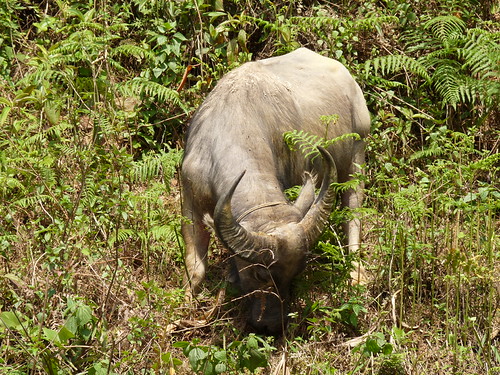
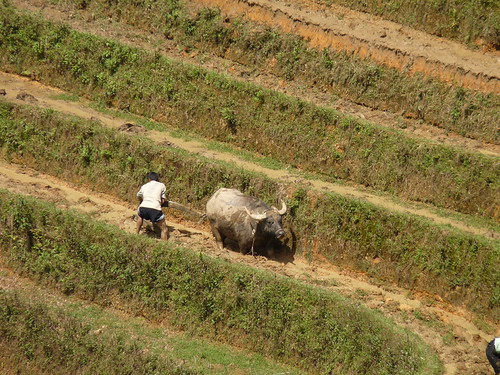
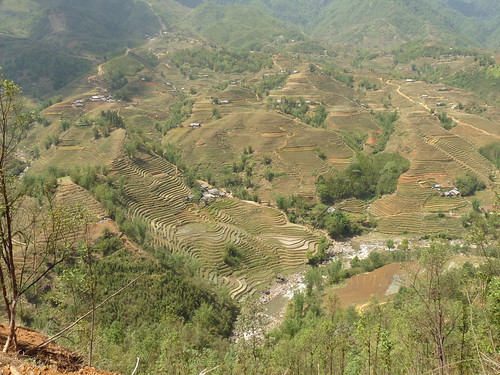
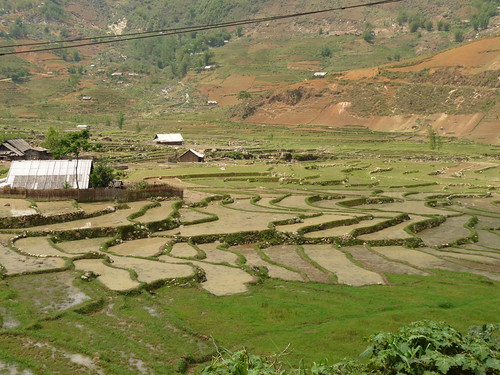
As we walked down into the valley we were surrounded by stunning views of paddy fields and soaring mountains. A lot of the narrow terraces are currently empty, the rice from them having been harvested. However, we did pass some men working using water buffalo to plow them ready for planting the new rice.
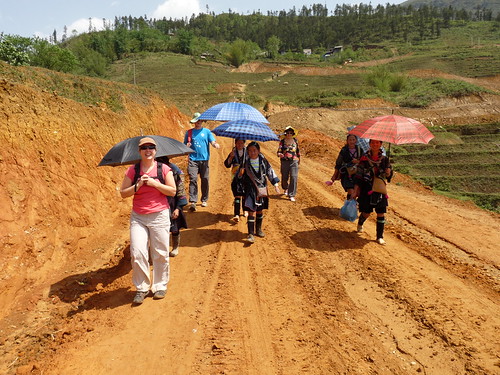
Around about midday we arrived at the edge of the first village where we stopped for some lunch. This is where the H’mong women who were still following us made their move. “You buy from me” rang out from several ladies swarming about us, joined by several more who had been trailing a bigger group across the fields. We worked our way into the restaurant and they seemed to settle down. Lunch was a little disappointing - we’d been hoping for some traditional village food, but instead were given baguettes with ham, cheese and salad to fill them ourselves. Never mind, it was pretty tasty, and kept us going through the afternoon.
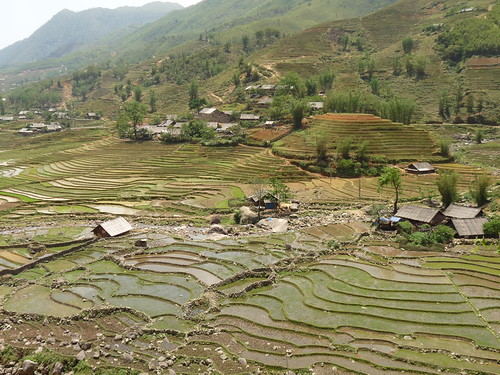
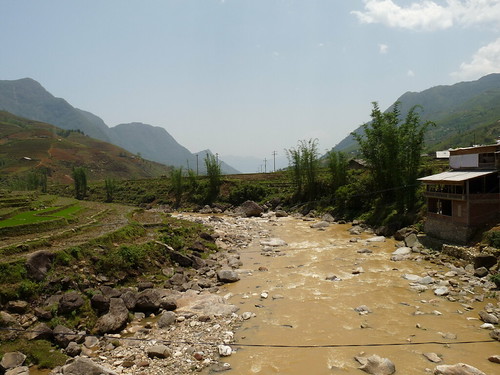
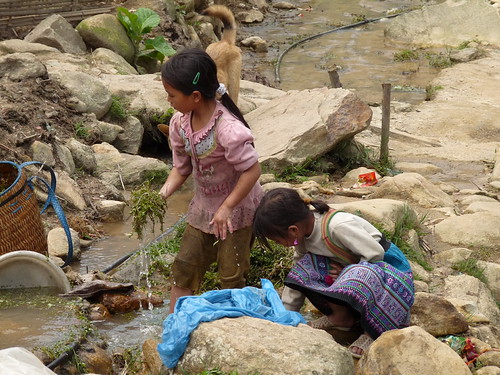
Lunch over, we made our way into the village. Here we saw more people working in the paddy fields, along with some local children washing some sort of leaves in the stream. This was a Black H’mong village and Chi was happy to explain things about their culture and how they live. They do have electricity from mains wires coming into the village (although it’s probably only as reliable as that in Sapa - i.e. not much!) and they generally have at least one tap in each house. Houses are mostly quite simple affairs. With regards the black leg bands that they wear on their legs, girls start wearing them at age 8 and they wear them for decency reasons.
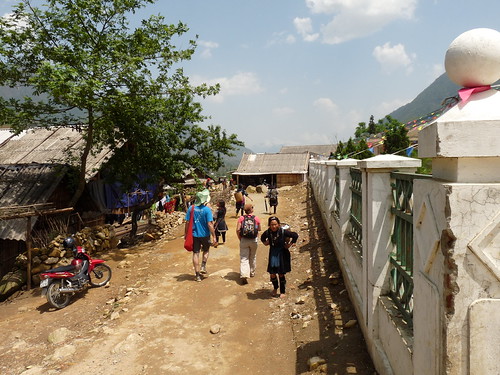
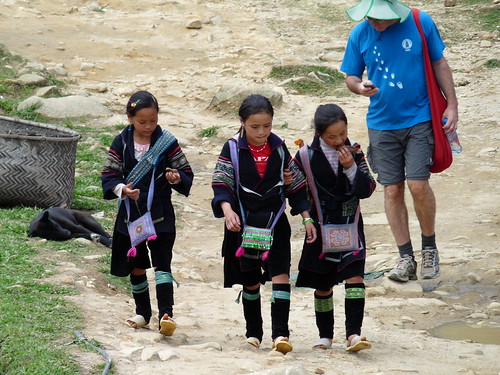
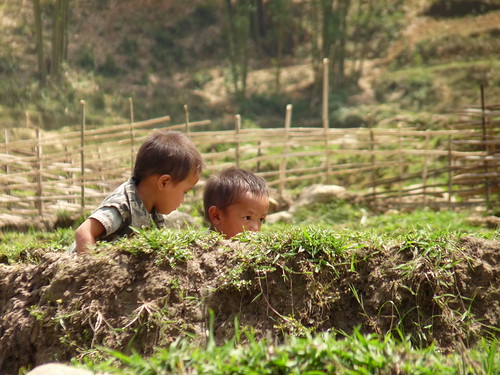
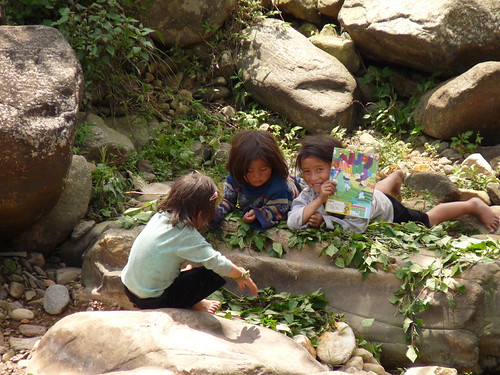
Making our way through the village we saw a number of children, some working, some playing. Children here get a lot more freedom than ours at home. Some of the smaller ones came up asking for ‘bon bons’ or sweets. We hadn’t taken any sweets for them, but gave them some balloons (better for their teeth!). They seemed quite happy with these and were happily blowing them up as we left.
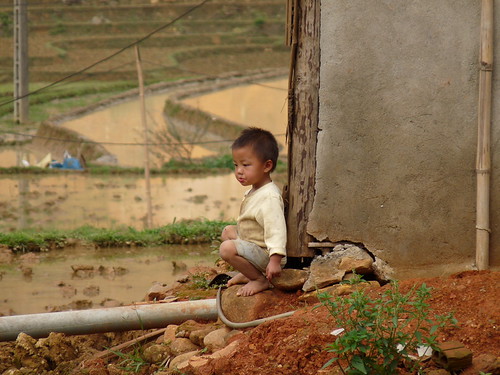
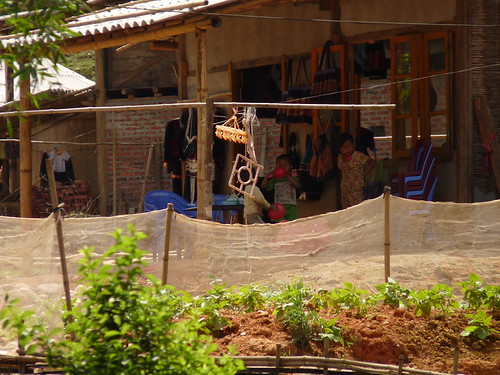
We continued on to one other village which was a different tribe, the Red Zhao who wear red headscarves. Chi explained that since the advent of compulsory education here all the tribes now speak Vietnamese, which is what they learn in school. This has opened up the villages a lot more and people from different tribes can now marry as they have a common language. Before, it would have been difficult as each tribe has its own language and indeed culture. The school children do still speak H’mong at home, but are generally bilingual in Vietnamese.
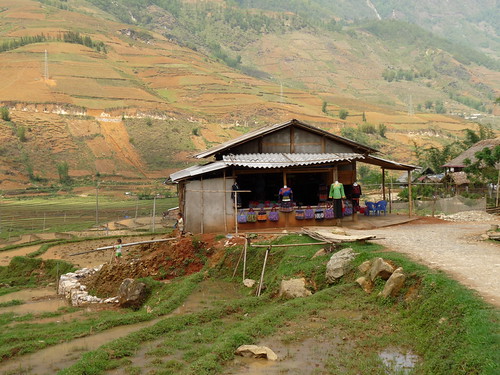
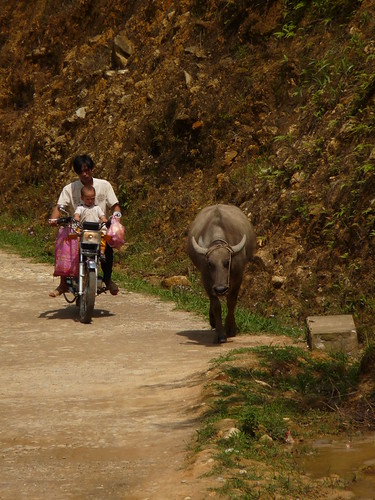
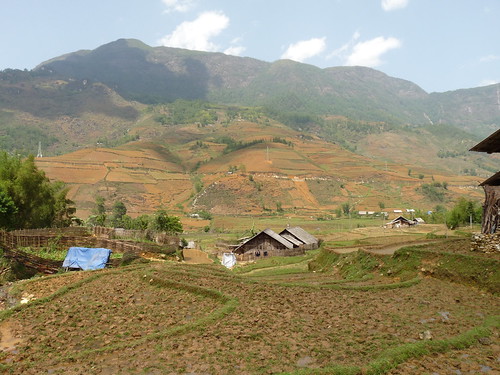
The bus picked us up from the bottom of the valley to transport us back up the hill to Sapa. It had been an excellent tour. Chi our guide was very open, friendly and frank about her life and it gave us quite an insight into these tribal villages where the people are very different from the Vietnamese, both in looks and culture. This is probably due to the isolation that they had for many years. We had also been very lucky with the weather, experiencing clear blue skies and the first day for a while where you could actually see the peaks of all the surrounding mountains, including Fansipan.
After our tour, we spent some time wandering around the market in Sapa and decided that some North Face coats would be a good investment for when we got home. It was incredibly hot and trying them on was not much fun, but at least we knew they would be warm for our winter. Some friendly bartering took place with the young girl on the stall and we went away happy with our purchases.