11th March 2010
Another week, another zoo, a different city, a different continent. One of the must-do attractions here in Singapore in most of the guidebooks and websites is Singapore Zoo. Set in a rainforest environment, this outstanding open concept zoo is particularly notable for its primates, especially its free-ranging orangutans.
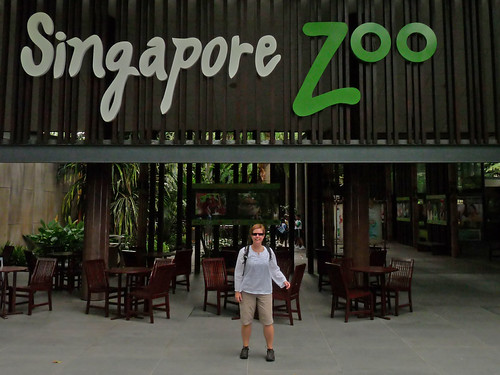
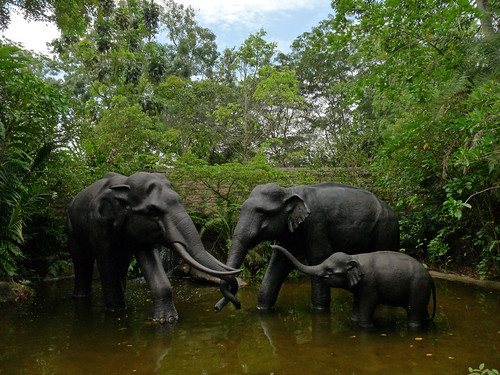
From the moment we stepped into the zoo, we were encompassed in an enchanting environment giving us the experience of walking amid a tropical rainforest.
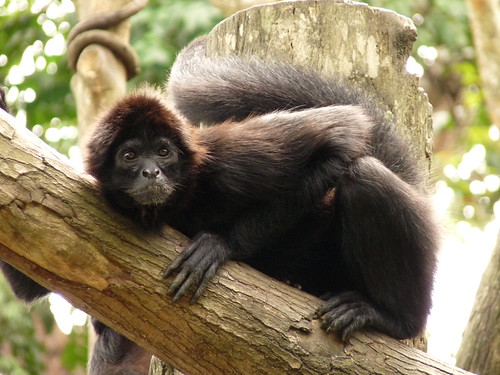
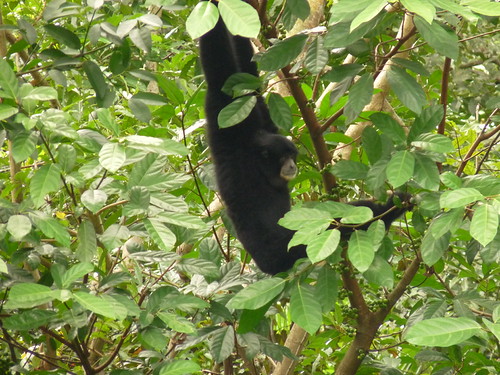
Our first encounter was with Rainforest Walk, a charming trail that features diverse tropical flora. We ventured further along the path, listening for the curious chattering of the cotton-top tamarins or the resonant song of the siamangs, the largest members of the gibbon family.
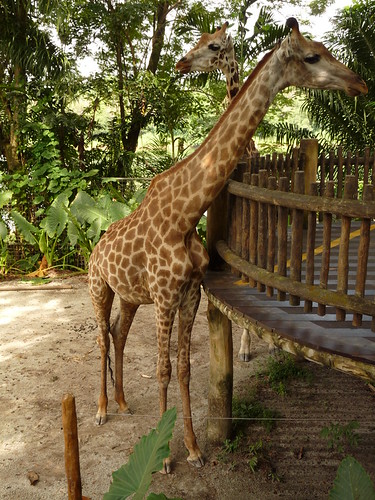
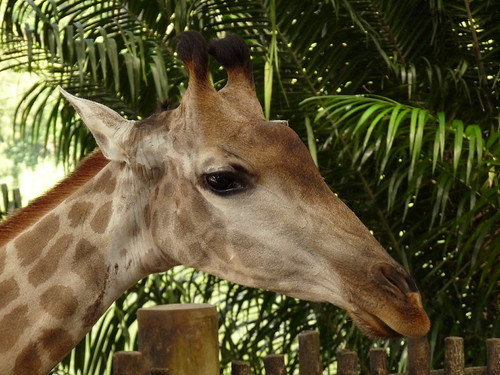
There was a morning feeding trail so we headed over to the giraffe enclosure to learn more about these elegant giants, then onto the jaguars.
When we arrived at the jaguar enclosure we were a little concerned at the small enclosure they were in, but the keeper arrived and explained that these were only 2 of the 5 jaguars the zoo has. They are not kept in this enclosure full time, but rotated. The jaguar is the third largest cat after the tiger and lion. As they were fed, one of the cats leapt enthusiastically into the water while the older black jaguar was not quite so keen, but did go in eventually.
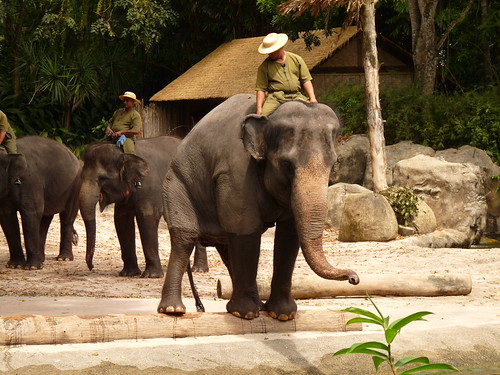
There are a number of shows at the zoo, all in specially built enclosures and we were really keen to watch the elephant show, so this was our next destination. Good choice. The girls were beautiful and we were able to witness the secret bond between the Asian elephants and their beloved Mahouts. A really special show which highlighted the elephants skills and uses as they fooled around with their Mahouts.
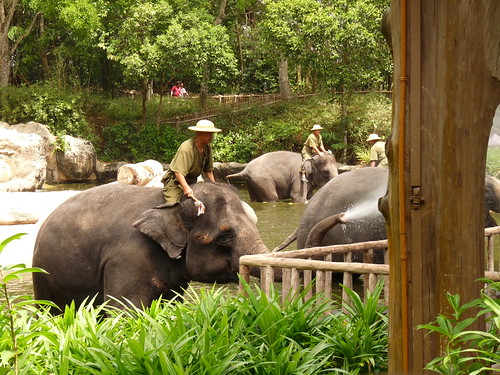
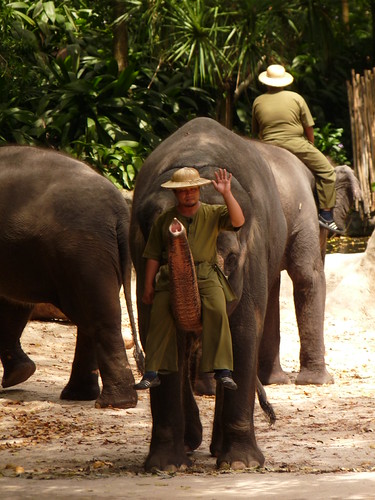
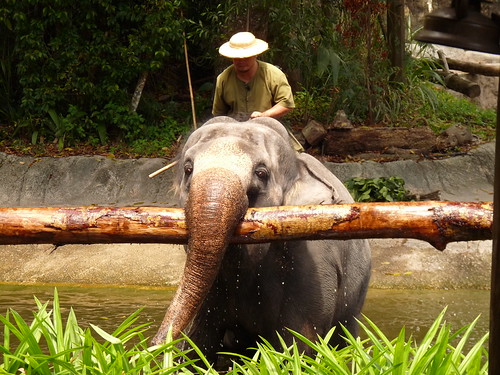
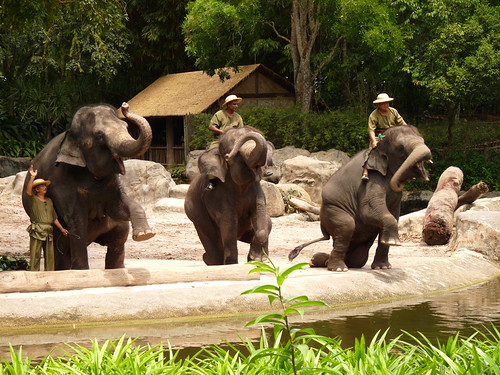
After the show, we hung around and were able to see the elephants tidying up their enclosure ready for the next display and enjoying a huge feed. They spend 18 hours a day eating. Magic.
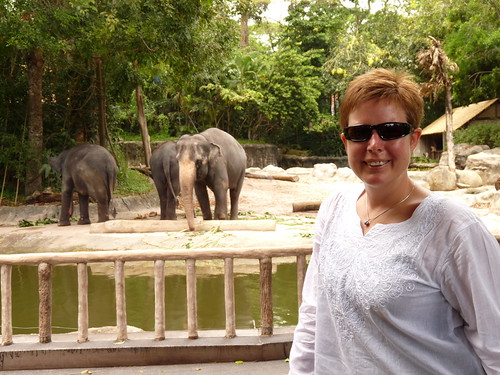
After the worst lunch we’ve had here in Singapore (KFC - which we don’t even eat at home, should have gone to the restaurant!) we followed the walking trail around the parts of the zoo we hadn’t visited so far.
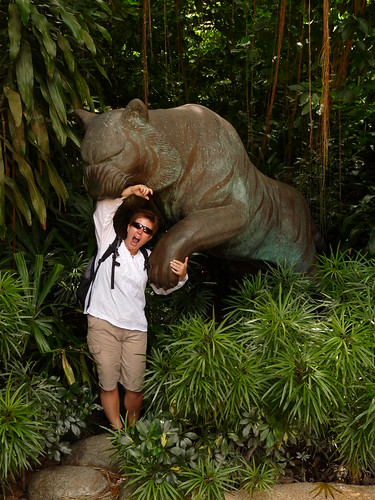
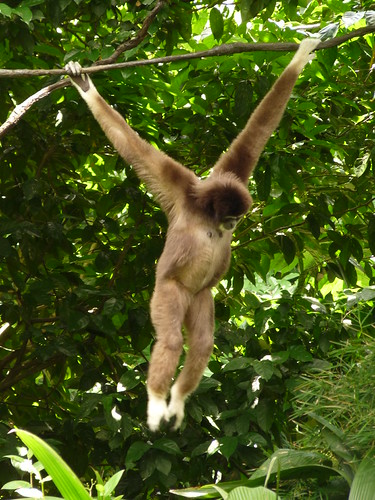
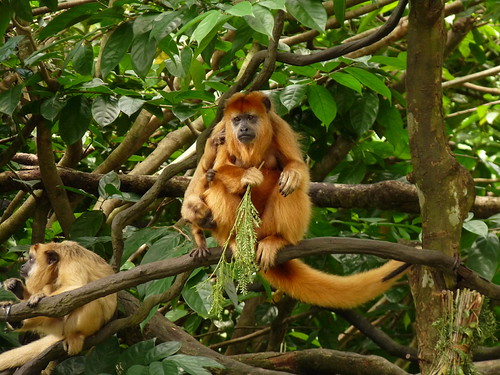
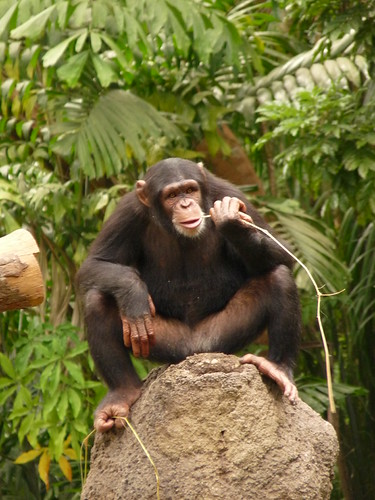
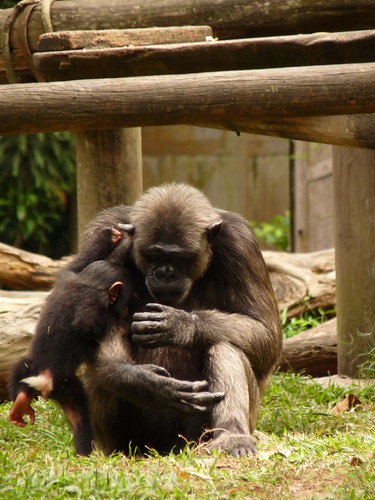
The most recognised resident at the zoo is the orangutan, and here we were able to enjoy fabulous eye-to eye views of these enigmatic apes. An elevated boardwalk took us into the treetops where we could observe their natural behaviour at close range.
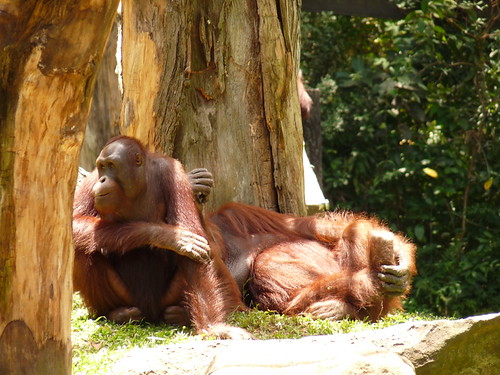
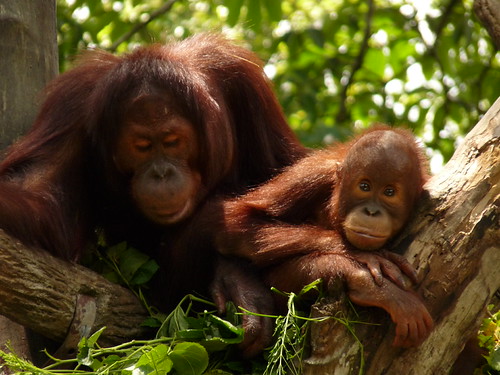
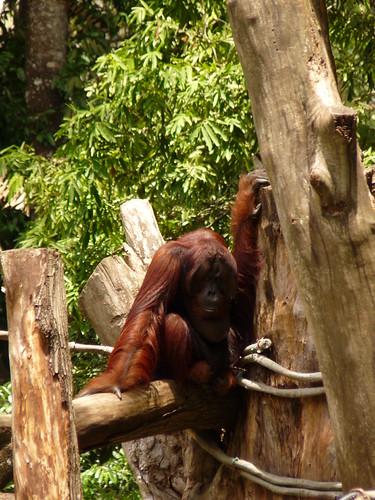
Singapore Zoo is very much focused on being educational. Home to over 2,500 specimens from 315 species, 16% of which are threatened, the zoo conveys important facts and messages about wildlife conservation, bringing forth the plight of endangered animals. The zoo has also attained a strong reputation internationally for its conservation initiatives and breeding programmes, including 37 orangutans born in captivity.
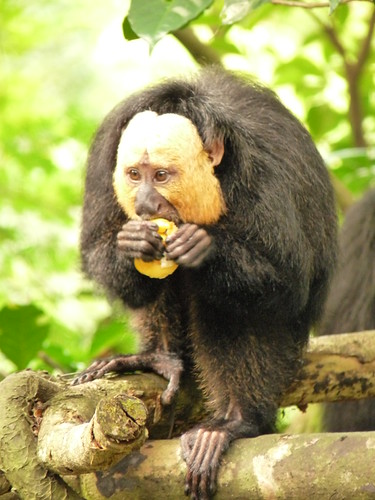
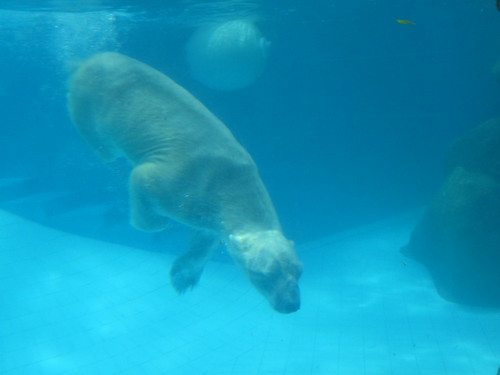
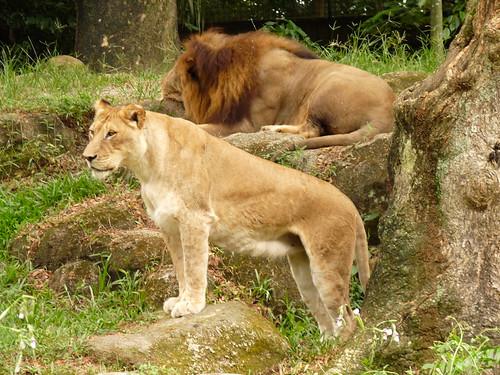
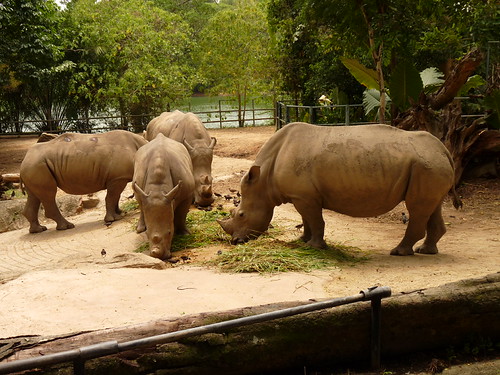
We saw all kinds of animals from all over the globe. Lions, white tigers, zebras, rhinos, hippos and many many different types of primates.
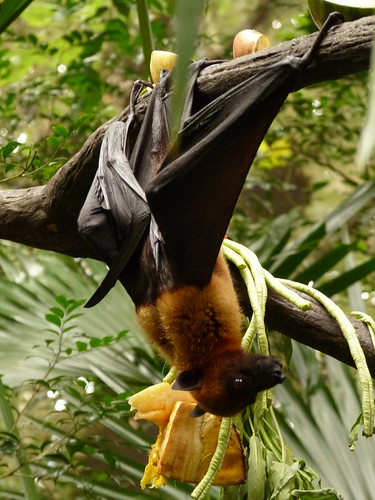
One of the hightlights of the afternoon was the exhibit about the Fragile Forest. This is an area containing free ranging animals, birds, bats and butterflies dedicated to emphasizing the fragility of ecosystems, in particular the rainforest which currently cover about 6% of the world’s surface yet contain 50% of the world’s species.
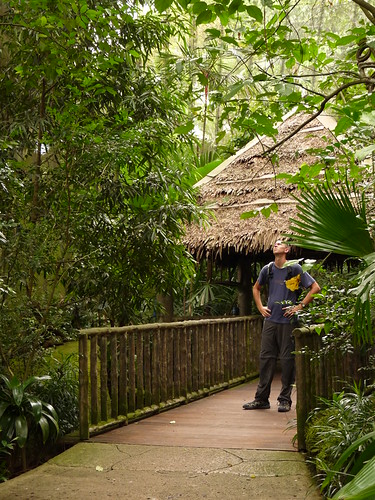
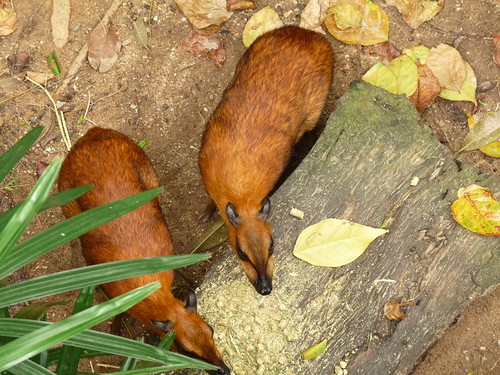
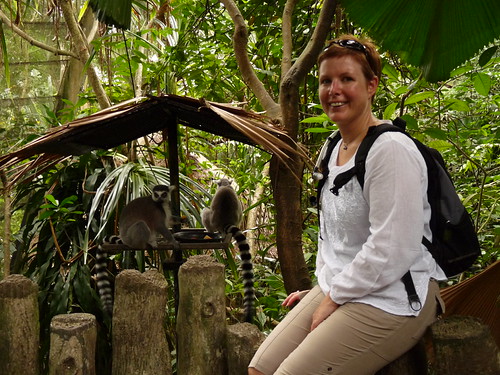
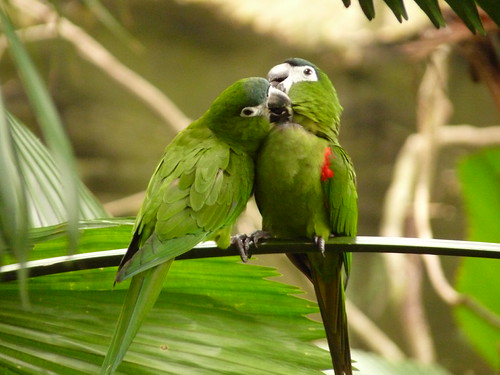
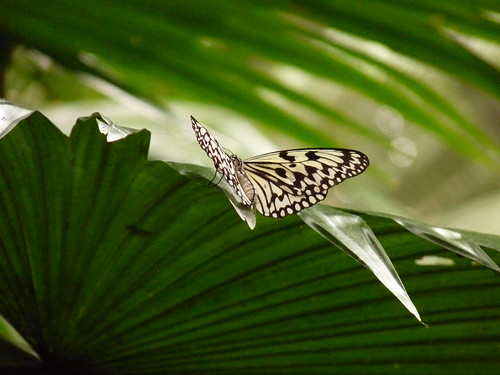
The rainforest environment has been recreated in the form of a 20,000 cubic metre flight area, one of the largest in the world. This area teems with a variety of rainforest species — butterflies, lemurs, mousedeer, sloths, fruit bats, lories, crowned pigeons and iguanas. Hundreds of mighty trees, delicate ferns, palms, shrubs and undergrowth flourish. We followed the path from the rainforest floor up to a viewing platform which took us up into the rainforest canopy.
This was a thoroughly enjoyable day, well worth the 40 minute trip out of the centre to get here. We especially enjoyed the primates section of the zoo which is something we haven’t seen much off in previous zoos. There are areas of the zoo where some of the enclosures seem quite small, but the conservation effort here and the fact that they are having success with breeding programs seems to suggest that the animals must be well looked after and happy. The only sad thing is that as you leave the zoo you realise how threatened so much of our fauna and flora is and that maybe these zoos are the only way of preserving these species for future generations.