18th February 2010
One of our aims on visiting Darwin was to try and get out to Kakadu National Park. We knew we would be limited in what we could do and see out there because we are here during the wet season and vast swathes of the park are under water, but we managed to find a reasonably priced day tour by coach which did the Yellow Water cruise, something we were quite keen on.
The coach tour is not the sort of tour we would normally do in that it was quite a large group made up of people quite happy to sit on a coach and be talked to and driven about and not a lot of actual activity involved, but we decided to go for it anyway.
Kakadu lies some 150km to the east of Darwin and covers an area of nearly 20,000 square kilometres. The park was originally brought to worldwide attention in the mid-1980s when it was used as a location in the film Crocodile Dundee. It is one of the very few places World Heritage listed for both its cultural and natural values.
It has a stunning biodiversity and is home to a wide range of creatures, including of course the infamous saltwater crocodile. The park also has important wetlands which are a major staging point for migrating birds. The park encompasses the entire catchment area of the South Aliigator River, misnamed by an early British explorer after the river’s prolific crocodile population. The landscapes range from the southern sandstone escarpment topped with plateau heathlands along with savannah wooldands which merge into paperbark swamps, tidal wetlands and mangroves belonging to the coastal fringe. There are also scattered pockets of monsoonal rainforest.
After a breakfast stop at a roadhouse, where we were entertained by a cheeky sulphur crested cockatoo who kept saying hello, we entered Kakadu National Park. The majority of the land here is now Aboriginal land which has been leased back to the government. However, there are areas within the park not subject to national park regulations such as the Uranium Oxide mine and other mines still being worked within the park along with land where local indiginous people have set up their small townships. These ususally take the form of 5 or 6 small houses shared by members of the same clan.
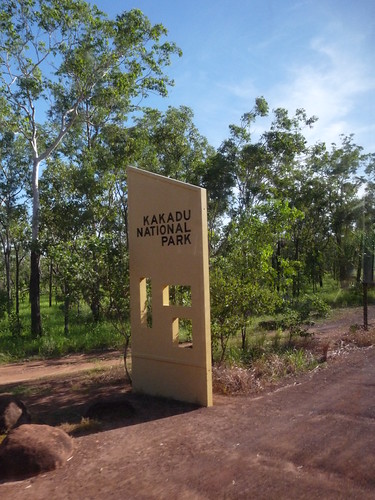
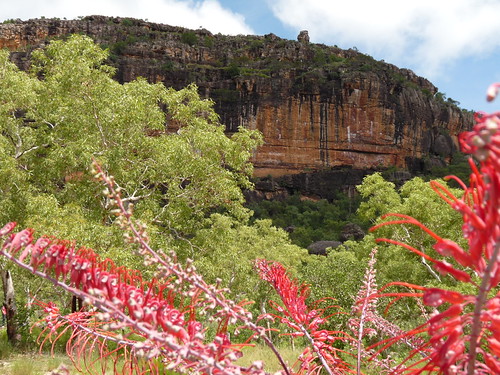
The next stop on the tour was Nourlangie Rock where our guide took us on a guided walk (or more acurately, an amble!). Nourlangie Rock is one of Kakadu’s most visited sites and our walk took us past an ancient Aboriginal shelter where there is preserved evidence of occupation stretching back twenty thousand years; dimples on boulders show where ochre was ground then mixed with blood for painting on rocks. The paintings at the nearby Anbangbang Gallery depict dramatic figures from Aboriginal stories which related to Aboriginal laws such as who can marry who and the proper way to behave.
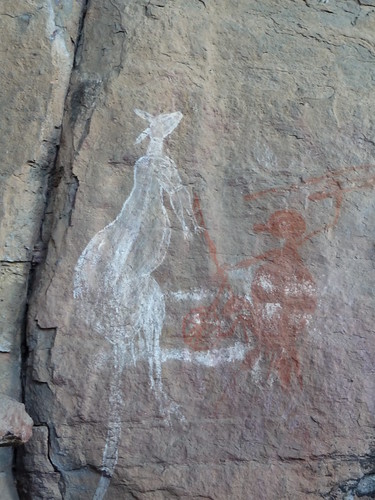
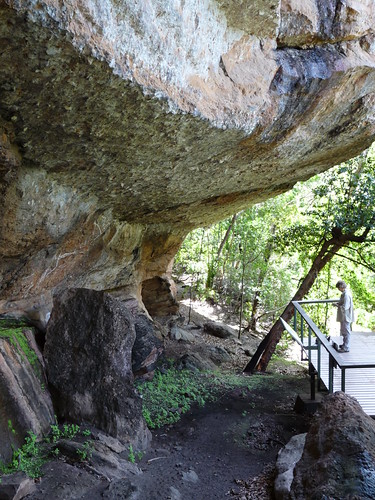
Some of these paintings were unusally vivid, this is because they were repainted (a traditional and sometimes ritual practice) in the 1960s over similar faded designs.
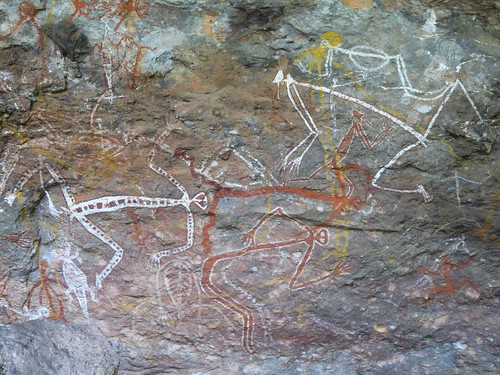
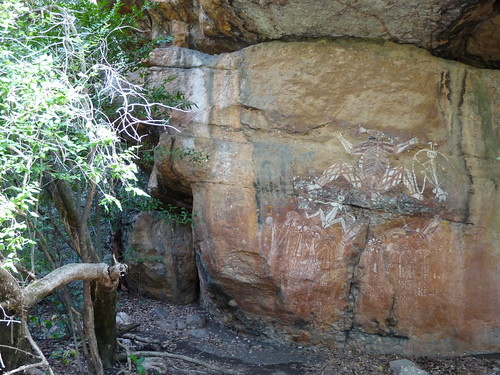
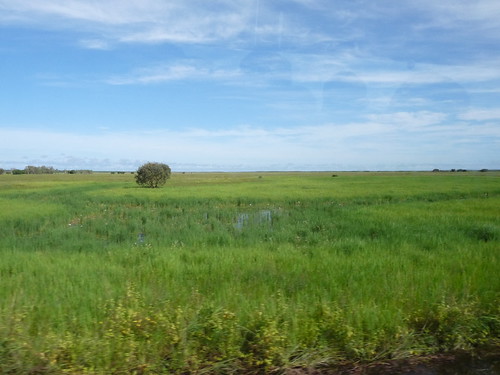
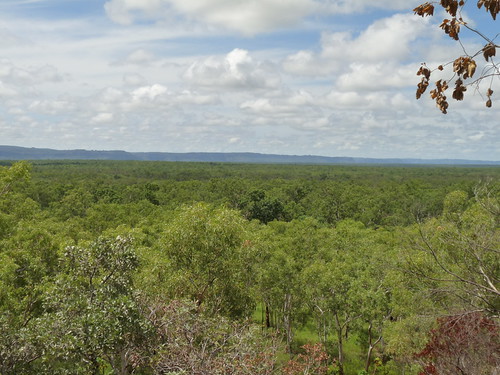
We were then given half an hour to walk up to the lookout over the Arnham Land escarpment. This provided impressive views out across the vast area of Kakadu with green vegetation spreading for miles into the distance. Although we were given half and hour, the walk itself only took 10 minutes.
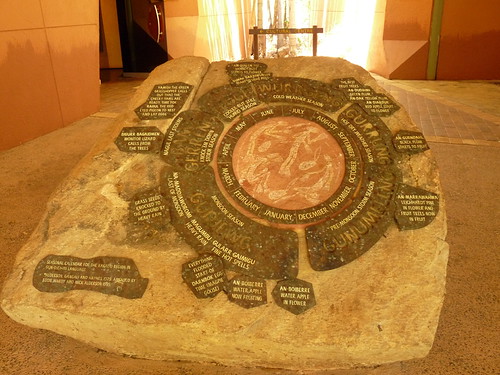
It was then onto the Warradjan Cultural Centre for a quick visit to find out more about the Aboriginal culture surrounding this land. The building has been designed in the shape of a pig nosed turtle and houses a large display about Aboriginal dreamtime stories and the six Aboriginal seasons at Kakadu.
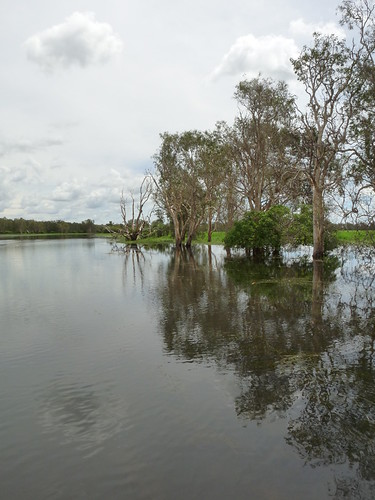
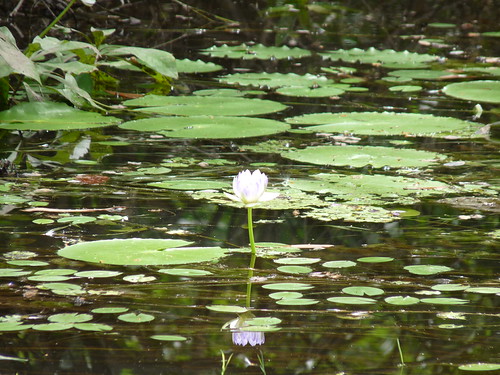
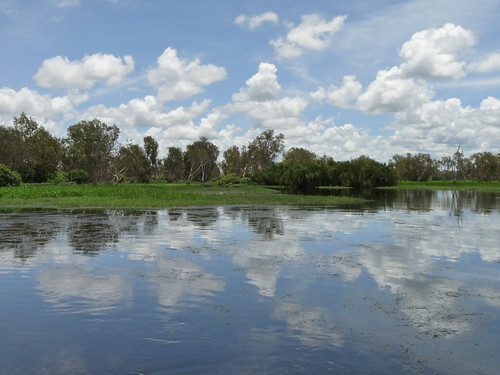
We enjoyed a lovely but quick buffet lunch at Cooinda Lodge before taking the shuttle bus down to where the Yellow Water cruise was departing. The cruise would take us across the Yellow Water wetlands and up the South Alligator River. We were hoping to see some saltwater crocs, but unfortunately because there is so much water around at the moment, the area that they can access is much greater and all we saw were a quick pair of eyes peeping above the water.
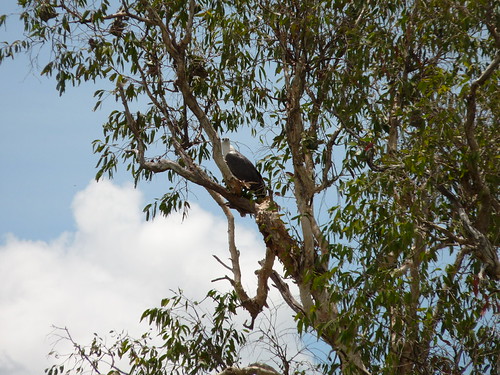
We did however spot a white bellied sea eagle which is the second largest bird of prey in Australia. The Aborigines believe that this bird swoops down and transports the souls of the dead up to the sky where they can watch over the living.
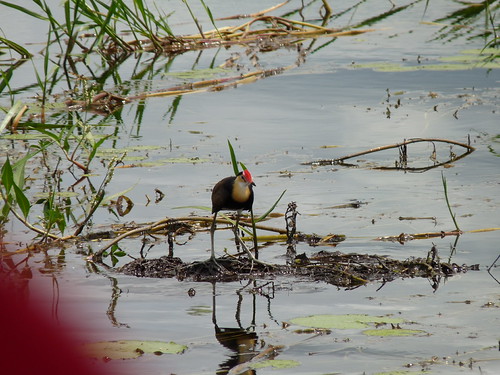
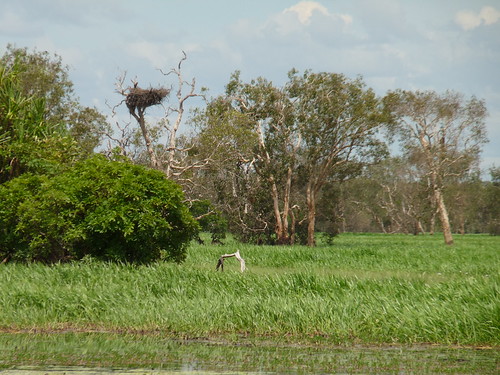
We also saw a data, the blue flash of a kingfisher flying across the bow of the boat, a jesus bird, some white egrets and plenty of jumping fish. We weren’t lucky enough to see a jabiru, but we did see its nest which is massive at about 1 metre wide by 1 metre deep.
The cruise with the cool wind blowing through the open sided boat was over too quickly and we were soon using the boardwalk over the flooded path to wait for the shuttle bus in the oppressive heat. After driving through some deep water in the (now underwater) car park we were back on the bus. Trip over, it was time to head back to Darwin. An opportunity for us to experience Kakadu in the wet, but not the sort of tour we’d rush to do again.