
9th February 2010
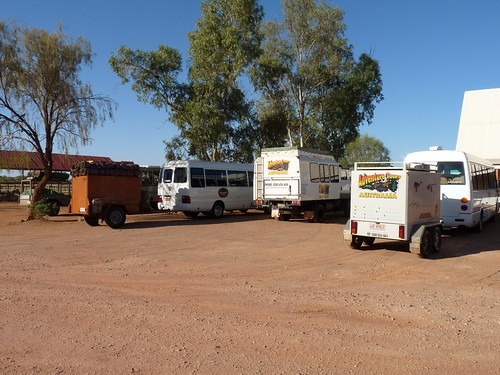
Up before the sun this morning to meet the 4WD tour bus which was to take us on our five day outback tour. There are 16 of us on the tour in all and what a mixed group we are, British, German, French, Swiss, New Zealanders, Dutch and of course our Aussie tour guide Paul.
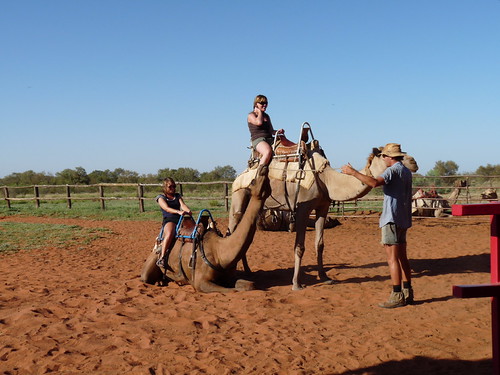
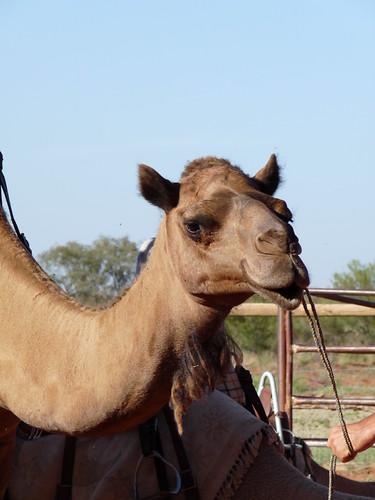
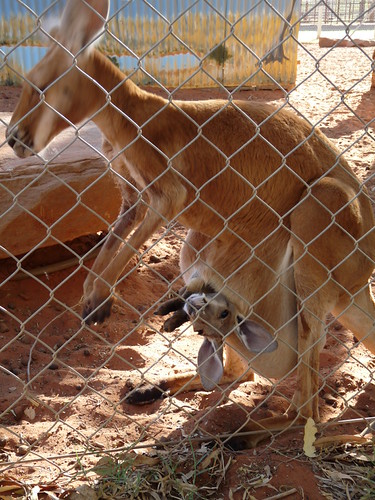
So, off we set towards Uluru-Kata Tjuta National Park. Our first stop was the camel farm at Stuarts Well. Australia is the biggest exporter of camels in the world and also has the largest population of wild camels in the world. This was our first indication of not only the heat we would be encountering over the next 5 days, but also the flies. I asked Paul if they were bad because of the animals here and he said they weren’t actually that bad and would get worse. He recommended some cream that was originally designed for horses to keep away the flies called Desert Dwellers but we couldn’t get any so I guess it’ll soon be time for the fly nets. We had the option of a camel ride around the paddock, but passed and instead went to see the baby camel along with the kangaroos and emus that were also at the farm.
Our second stop was at Mount Ebeneezer road house where we had the opportunity to look at some traditional Aboriginal art produced by the local community. As we were departing the roadhouse along the long straight road we spotted a wedge tailed eagle, the largest bird in central Australia - what a treat!
As we drove a large rock formation appeared on the horizon, not Uluru, but Mount Connor also known as Foolaru for obvious reasons. A large table rock, this is actually a monolith that’s 3 times the size of its famous neighbour. Known as Atilla by the Aborigines and beleived to be an ice giant that melted away in the sun of the red centre. A photo stop for this and the salt lake on the other side of the highway. Fly nets definately on!
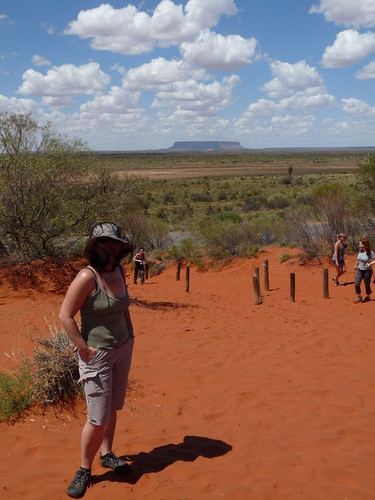
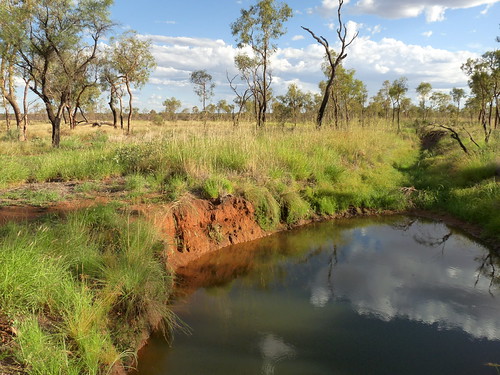
We were definately driving through the centre of the desert by now, but one that was a surprisingly lush green in places due to rains that they had had just a couple of weeks ago. We drove through a whole area covered with trees known as desert oaks. These clever trees have adapted to their environment and have developed a bark which is resistant to fire.
Finally we arrived at today’s highlight - Uluru, some 450km from Alice Springs. We stopped at the sunset car park for a photo shot, the one on all the postcards, then it was onto the Aboriginal cultural centre. The centre gives information about the local Aborigine beliefs and laws, including the sacredness of the rock and asking people not to climb it. This wasn’t even an option for us though since the rock is closed from December to March due to the temperatures.
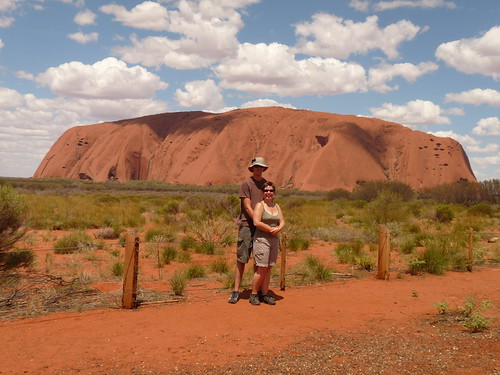
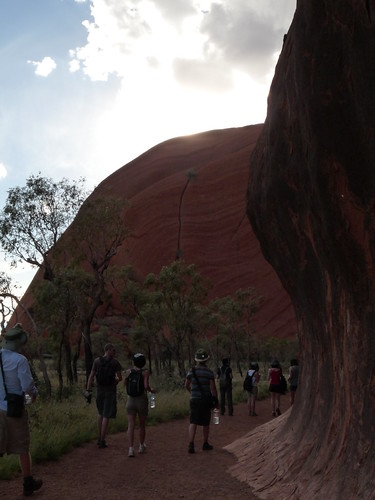
The afternoon was devoted to enjoying the sites of Uluru with a short guided walk by our guide Paul where he pointed out some of the caves in the rock traditionally used for ceremonies, cooking or teaching children. He also pointed out some sacred sites around the area where you are not allowed to take photographs, or places used for women’s business (usually things about pregnancy and childbirth) where men weren’t allowed or vice versa.
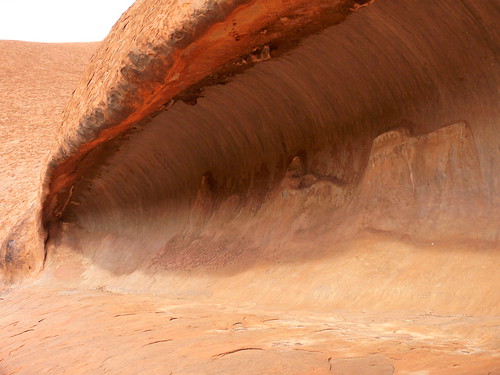
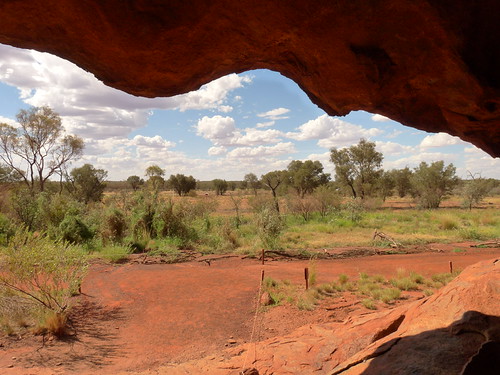
After this we were turned loose on the Uluru base walk. The full circuit is about 9kms, but we only walked 7kms of this taking about 2 hours. It was extremely hot by now and the flies were being a real pain, but being so close to this bright red rock, set off by the unusually green vegetation, which was practically luminous in some places was well worth it. The contrasts between the blue skies, red rock and green trees was beautiful. As we walked we chatted with some of the other people on the trip, it was a really good opportunity to get to know the others and by the end of the walk we were on our way to becoming firm friends.
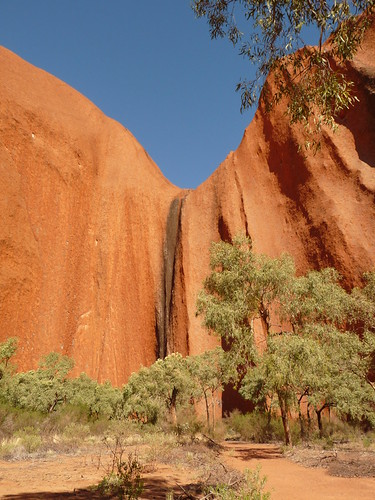
The base walk completed, we returned to the campsite at the Ayres Rock Resort which is the only place in the park where people can find accommodation of all types, from camping to a six star hotel. We climbed to the top of a sand dune with some sparkling wine and nibbles ready to watch the sunset over Uluru and see the rock do its thing.
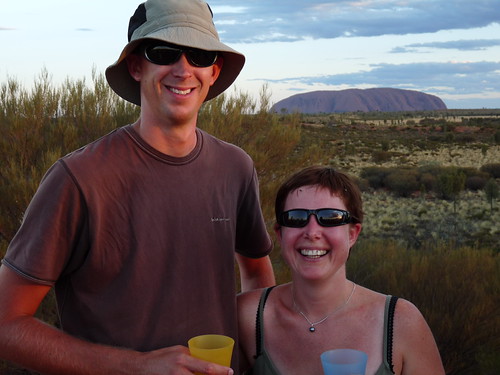
Unfortunately, cloud cover meant the rock didn’t change colour, but fortunately from our viewing point we could see Kata Tjuta (The Olgas) which completely stole the show with the sun setting behind them and silhouetting them on the horizon. An amazing sight.
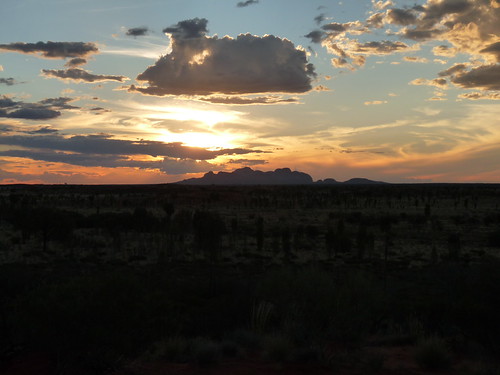
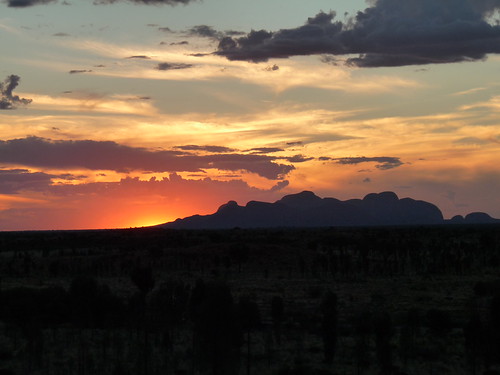
However, there was still another spectacular sight to come in a day of spectaculars. The night sky. On this trip we were sleeping out in swags, a swag is like a great big canvas sleeping bag with a thick mattress inside it. We unrolled them and lay back to marvel at the millions and millions of stars above us, we could see the milky way and satellites passing overhead. I went to sleep looking for a shooting star, but a full day and comfy swag meant I was soon asleep without seeing one. Not to worry, tomorrow night’s campsite is even further from civilisation and with hardly any ambient light, so another opportunity for stargazing.