
3rd February 2010
This morning our road trip continued with a visit to Port Fairy, once an early port and whaling centre. Andy has decided to accompany us all the way to Adelaide. I think the sight of the small station at Warnambool and the fact he may have had to wait a few days there for a train helped make up his mind! So all three of us set off in high spirits for a walk around Griffiths Island in Port Fairy.
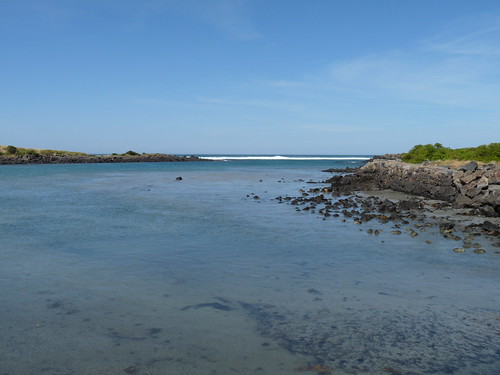
Griffiths Island, poised between the ocean and Port Fairy Bay has a muttonbird rookery with a specially constructed lookout where people can watch the birds at dusk. However, since we were there around 10am there were no birds to be seen and it was the crashing surf breaking on the far point of the island that attracted our attention. We followed the sea wall out for a closer look. On our way we saw plenty of ibis, egrets and gulls.
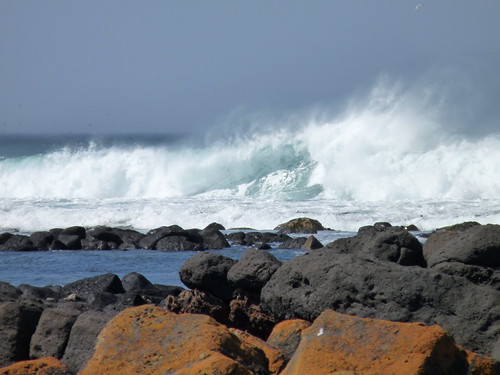
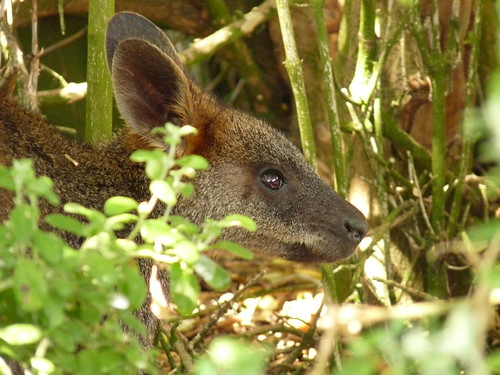
After sitting and watching the pounding surf with the spray blowing back off the top, we headed back to the path. As we passed one of the bushes, a sudden movement attracted our attention, on closer inspection we found a shy swamp wallaby lurking in the bush.
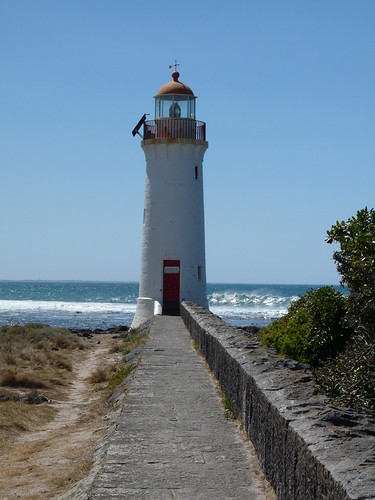
Back on the track, we walked across two deserted beaches to a pretty, little lighthouse warning ships of the rocky shoreline.
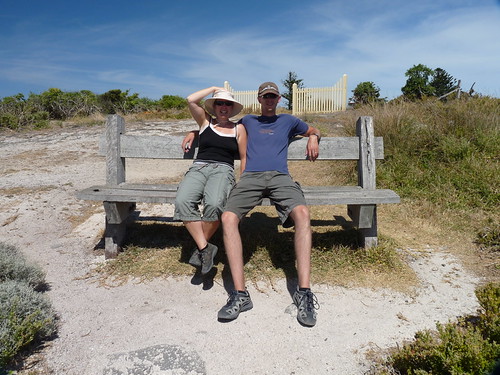
Next, we went to Battery Hill which was supposed to have views of the coast, but in fact, all we could see were some of the large national-trust listed buildings lining the river.
We returned to the car and got back on the road where the vastness of this huge country quickly became apparent. The road went inland and besides a few small towns we passed through, the scenery was mostly bush and not much else.
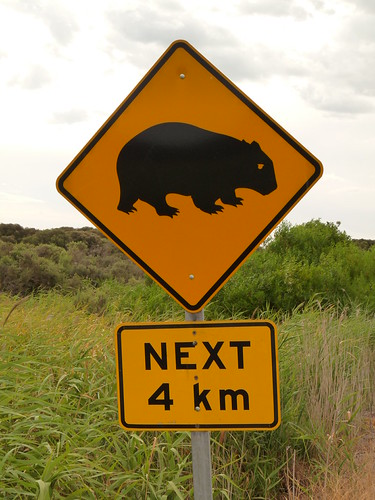
A quick lunch stop at a picnic site next to a lake by the side of the highway was a welcome break to the ongoing bush landscape.
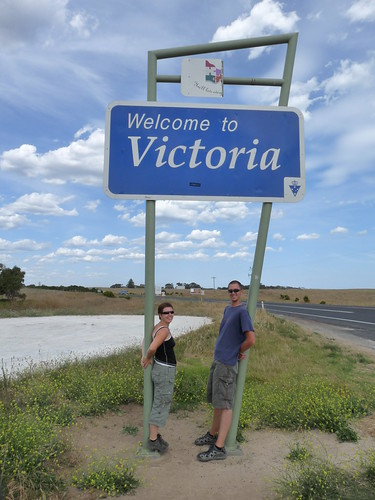
The appearance of quarantine signs warning of the offence to transport fruit and vegetables between states heralded the approach of the border between South Australia and Victoria. A quick stop for the obligatory photo then we were back on the road.
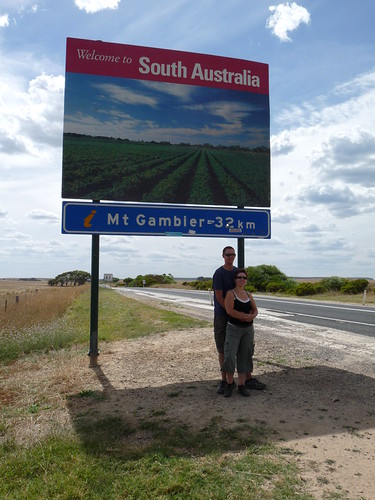
Our first stop in South Australia was Mount Gambier. This small city sprawls up the slopes of an extinct volcano and has three craters each with its own lake surrounded by heavily wooded slopes, filled by underground waterways. We headed to the city centre for a visit to the cave gardens, a shady park surrounding a deep limestone cavern with steps leading some way down.
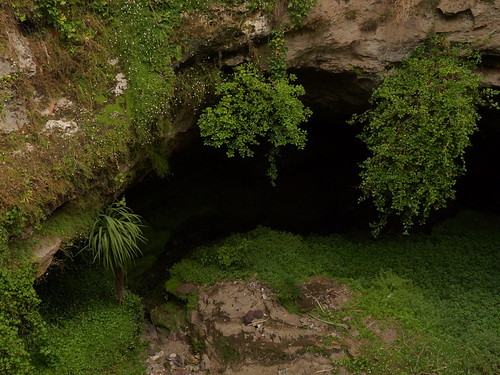
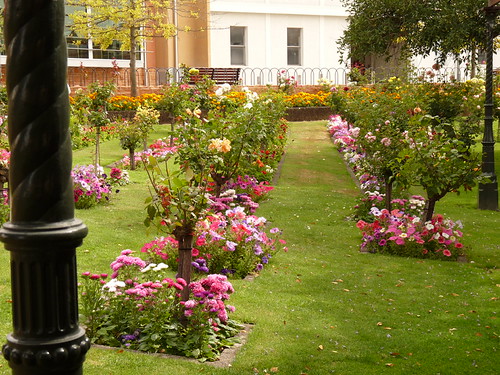
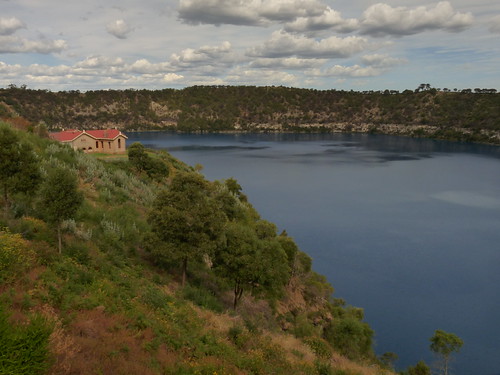
The stream running into the Cave Gardens eventually filters into the Blue Lake, which was our next stop. Blue Lake is the largest and most stunning of the city’s three lakes. From November to March each year the water in this caldera is a mesmerizing cobalt blue, reverting to a moody steel blue in the colder months.
Our overnight stop was in Robe. Robe was one of South Australia’s first settlements and is now a popular holiday destination. During the busy season the population of around 800 swells to over fifteen thousand. Since the summer holidays are now over here everything was pretty quiet and we were warned that everything would shut around 9pm. Not needing to be told twice, we headed out for an early meal.