30th January 2010
Melbourne is the capital of the state of Victoria, and also Australia’s second largest city. It is widely known as Australia’s cultural capital due to its dedication to the arts, commerce, education, entertainment, sport and tourism. Since Melbourne is very much a city with a vibrant cafe-culture which prides itself on its ’livability’ we decided to spend the morning walking around, getting our bearings and getting a feel for the place.
We started by walking through Carlton Gardens, home to one of Melbourne’s most significant historic landmarks, the Royal Exhibition Building which was built for the 1880 International Exhibition and was home to Australia’s first parliament in 1901. It later housed the Victorian State Parliament and was used for the 1956 Melbourne Olympics and has since been added to the UNESCO World Heritage List.
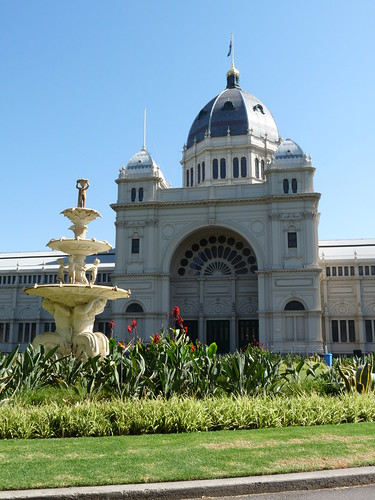
We were headed for the Melbourne Museum, not to look around, but to buy IMAX tickets to see Avatar in 3D. Mission accomplished, along with a cheap museum ticket to use at a later date.
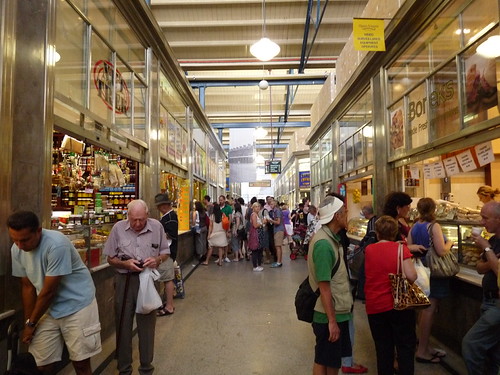
Melbourne is definately a city of markets, and perhaps the most famous of these is the Queen Victoria Market. It is a collection of huge, open-sided sheds and high-roofed decorative halls where you can buy practically anything from new and second-hand clothing to meat and vegetables. Each different category seems to have its own area within the market and there is great diversity among the goods on offer, including Vietnamese, Greek and Italian produce. With all this lovely food on offer we simply had to buy some stuffed vine leaves, feta cheese and fresh salad for tonight’s meal along with some foccacia and turkish rolls. We could have spent an absolute fortune, everything piled high, looking fresh and stallholders crying out vying for attention. Noisy and crowded, but a real treat.
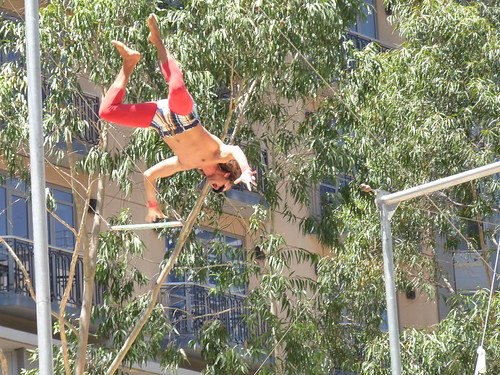
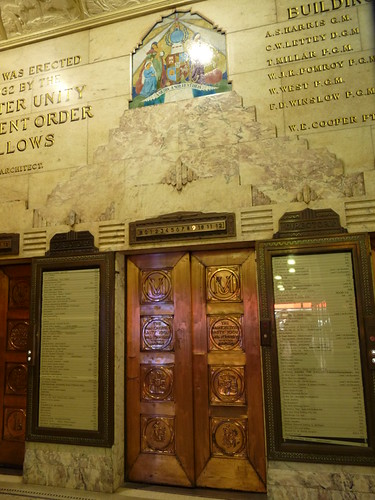
We had spent a good couple of hours looking around the market so we decided to take our goodies back to the apartment and have some lunch before heading out again. Melbourne has an excellent, efficient and cheap transport system which includes buses, trams and trains. We took the tram back into the CBD to City Square where a trapeze performance was going on. We stood and watched for a while before resuming our wander about the city. We went into the Manchester Union Mall where the lifts were quite something, decorated in a decadent art-deco style.
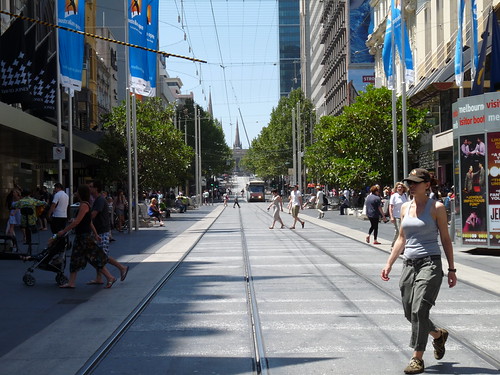
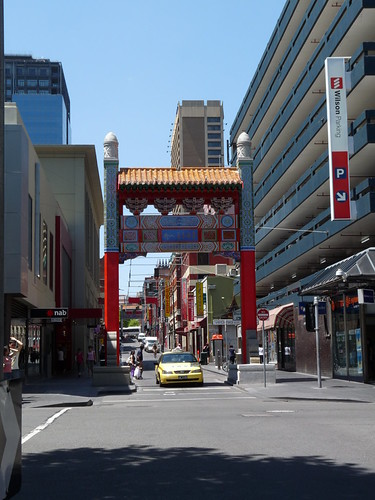
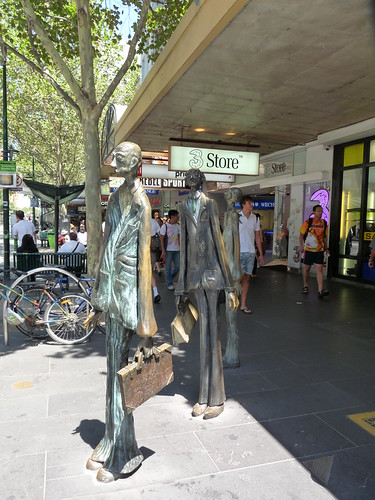
We continued our wandering through parts of China town, passing some of Melbourne’s street sculptures on the way.
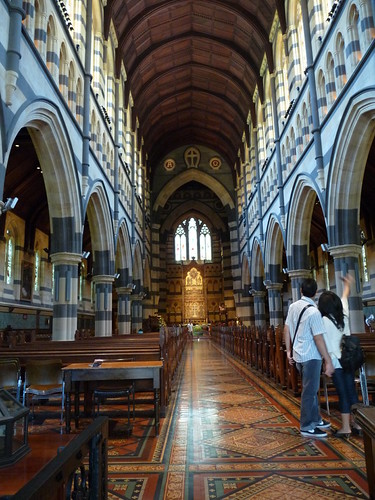
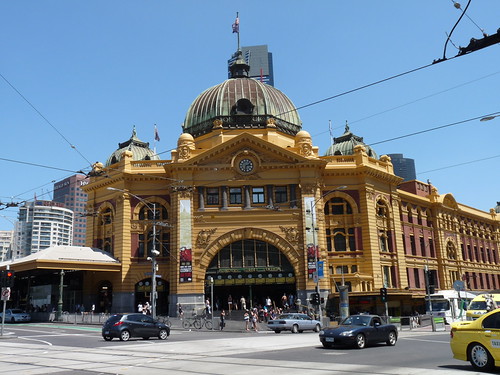
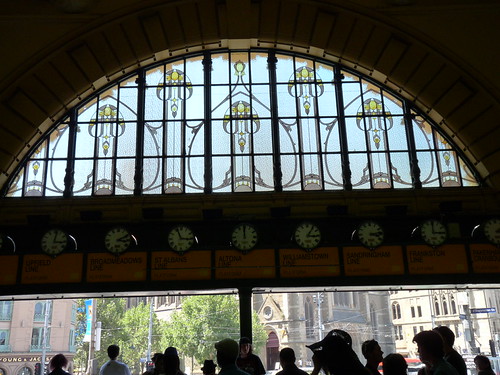
We headed for Federation Square, calling into the major Melbourne landmark, St Paul’s Cathedral and visiting Flinders Street Station to check out the famous Melbourne meeting spot, under the clocks.
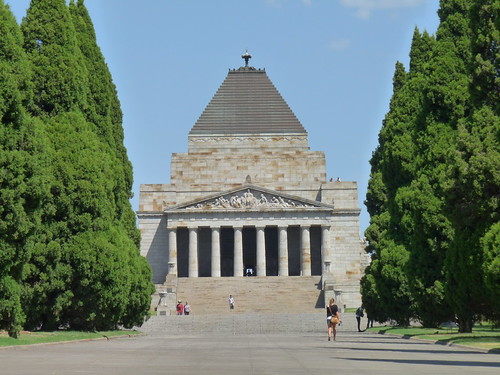
From Federation Square we walked, in the now very hot afternoon sun, to the Shrine of Remembrance. This massive building was built as a memorial to the men and women of Victoria who served in World War I and is now a memorial to all Australians who have served in war. This is where people come together for ANZAC Day and Remembrance Day and is one of the largest war memorials in Australia.
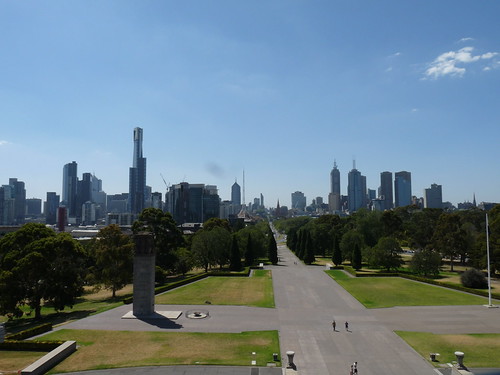
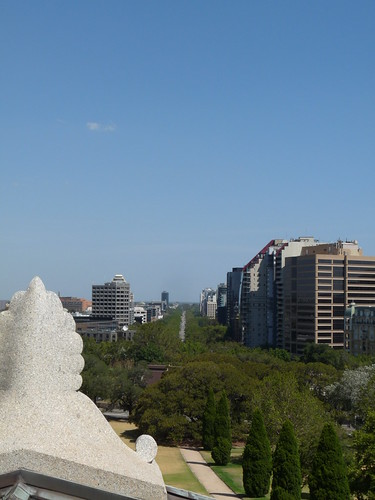
We entered the Shrine and were greeted by one of the guides who told us that we could go up to the balcony on the top of the building. From here we had some great views right over the city out to St Kilda and across the CBD.
We climbed back down from the balcony and entered the central Sanctuary. This Sanctuary contains the marble Stone of Remembrance, upon which is engraved the words “Greater love hath no man”. It has been designed so that on 11 November at 11am, a ray of sunlight shines through an aperture in the roof to light up the word “Love” in the inscription.
I have often wondered why Australia seems to have these great big memorials to their war dead. We have already visited the Memorial in Sydney and Canberra is full of statues paying tribute to the dead from many conflicts and many branches of the armed forces, yet in the UK we simply have our cenotaphs. Talking to one of the very friendly guides in the Shrine answered my question. Basically, in the 1920s after the First World War Australian’s whose relatives had died in battles on the other side of the world simply didn’t have the means to travel to the war cemetaries as we in the UK did. Building these memorials was their way of having something to focus their grief on. Also, the memorial helped returning service men, offering them support in returning to normal life after the horrors of conflict.
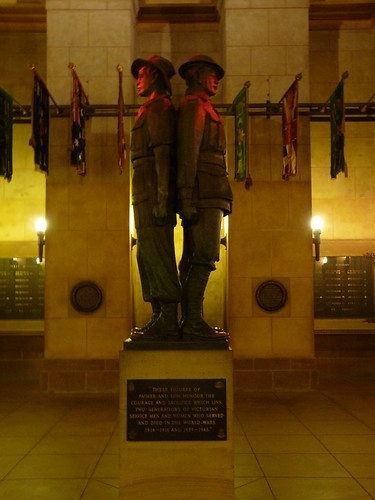
Beneath the Sanctuary lies the Crypt, which contains a moving, bronze statue of a father and son and panels listing every unit of the Australian Imperial Force. From the crypt, we went through into the Visitor Centre which contained pictures of the Shrine being built as well as a picture of the dedication ceremony performed by the Duke of Gloucester.
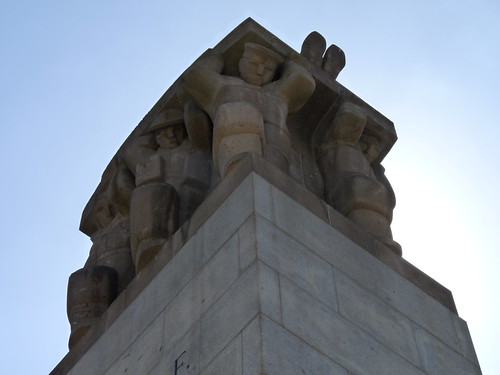
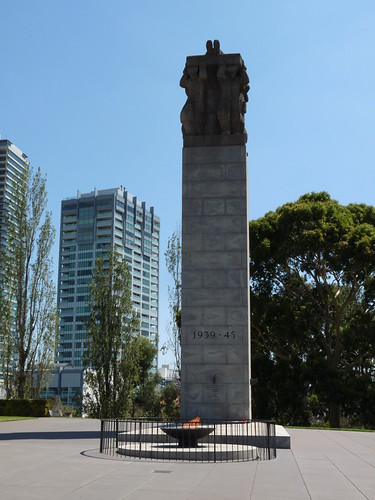
Although the main building of the Shrine itself is a memorial to those who gave their lives in World War One, the site of the Shrine within its formal gardens has been expanded to include later conflicts. The forecourt in front of the Shrine which contains a cenotaph topped by a granite statue of servicemen bearing a dead compatriot along with an eternal flame and three flagpoles on the opposite side is a memorial to World War 2. The flame has been alight since the Queen lit it in 1954.
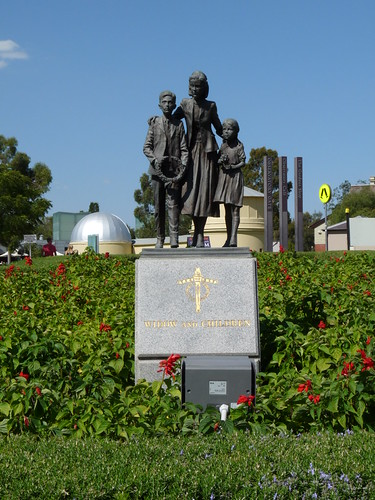
There is also a garden in remembrance of the Widows and Orphans and a remembrance garden which remembers more recent conflicts including those of Afghanistan and Iraq.
To return to the apartment, we decided to walk through the large park area of Kings Domain, past the Rod Laver Arena where the Australian Open is currently being played and around that hallowed cricket turf of the Melbourne Cricket Ground, where I believe my Bampa spent many a pleasant hour watching the game.
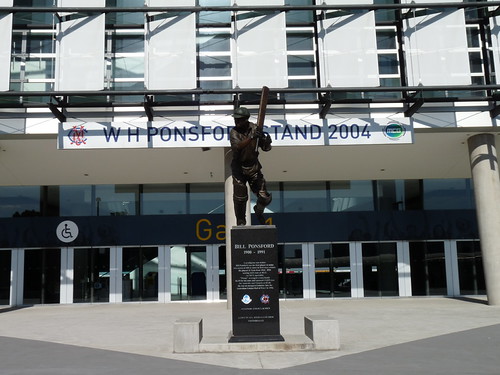
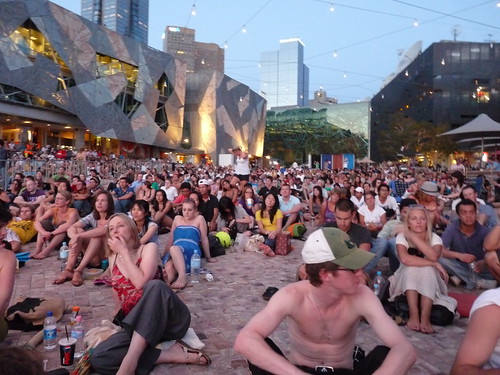
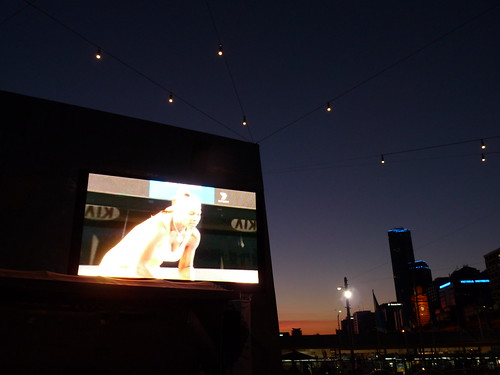
This evening we met up with a guy from Reading that we met in Auckland, Andy, to watch the women’s finals of the Australian Open. We made our way to Federation Square where they had big screens up for the tennis. It had been so hot during the day (a high of 36 degrees today) that the bricks on the floor of Federation Square were still really hot - too hot to put bare legs on. We joined in with the Belgians cheering on Justine Henin, but in the end Serena Williams was too strong for her and won the hard fought game.
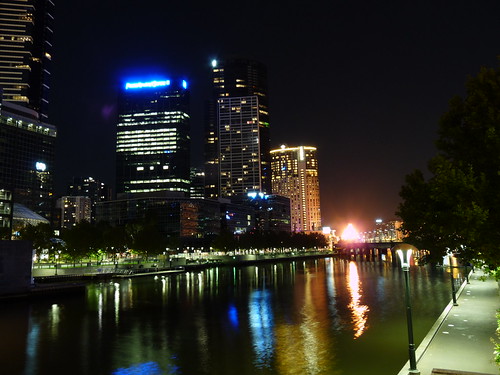
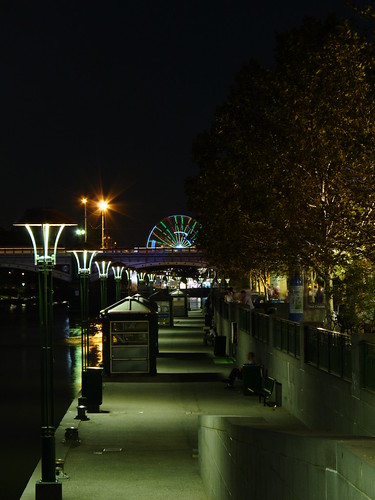
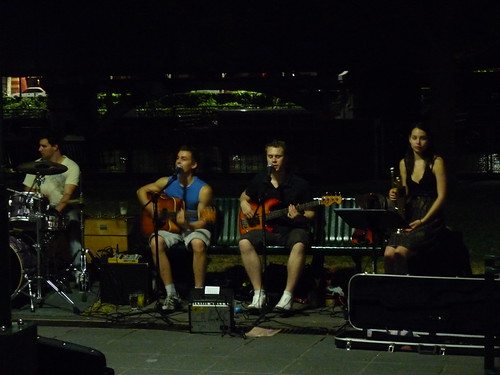
After the match we took a stroll along Melbourne’s Southbank and stopped to watch and listen to the various street performers along the restaurant lined walkway.