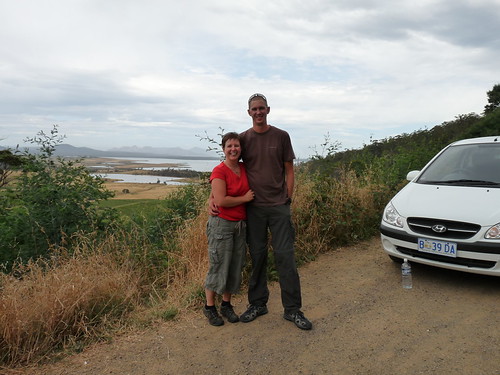
22nd January 2010
Another glorious day, and we headed out from our lovely studio unit towards Taranna to see some Tasmanian Devils at the Tasmanian Devil Conservation Park. We arrived just in time for the 10am feeding session so went straight to the appropriate area where we quickly spotted some Tasmanian Devils, a mother and two cubs, a boy and a girl. The cubs were running around the pen making cool noises, not quite a growl and yawning which is apparently common behaviour in devil society and a way of showing off the size of their mouths.
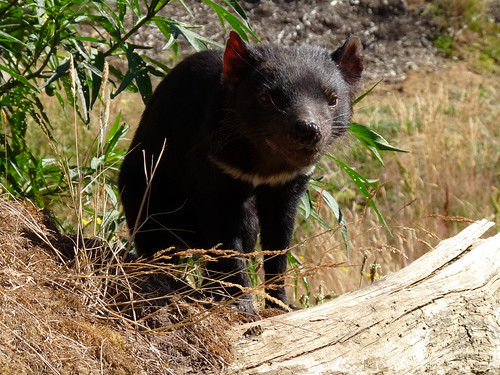
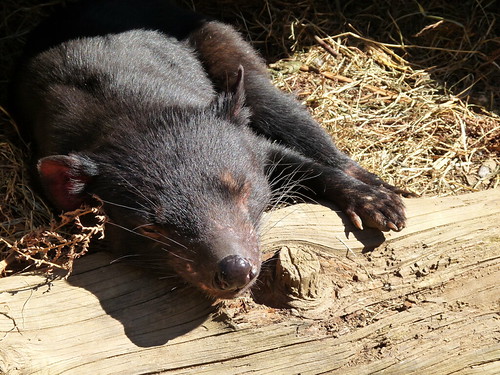
While we were waiting for the keeper, one of the dozen or so spectators lost her hat into the pen which the devils delighted in trying to kill as soon as it hit the deck. We didn’t have to wait long for the keeper who gave us loads of information about the devils (after rescuing the hat of course).
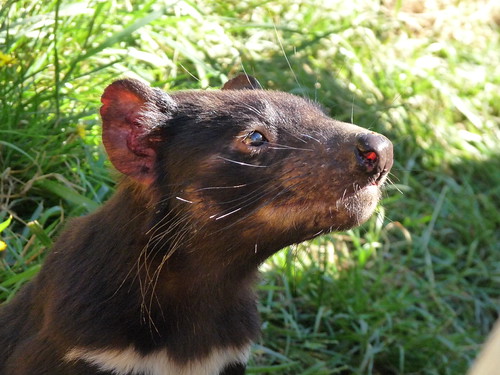
Tasmanian devils are forecast to be completely extinct within just 10-15 years due to a disease called Tasmanian Devil Mouth Tumor. This is a cancer which, unusually, is spread through direct contact between mouths. Since devil society consists of biting during mating and eating from the same carcus and fighting, it is quite easily spread. The conservation park has about 20 devils in captivity and along with other parks in Tasmania and a few on the mainland is working to ensure a clean blood-line which is disease free in the event of complete extinction in the wild. There is also work going on to try and breed a disease resistant line, but currently there is no cure for the disease so it’s only going to get worse.
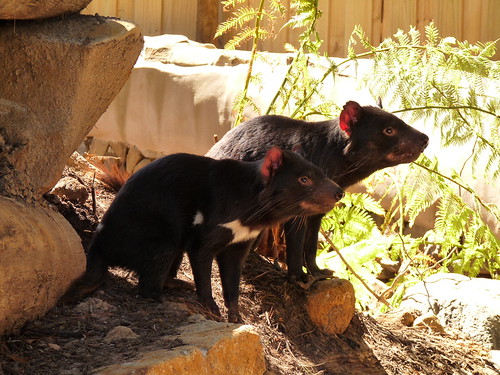
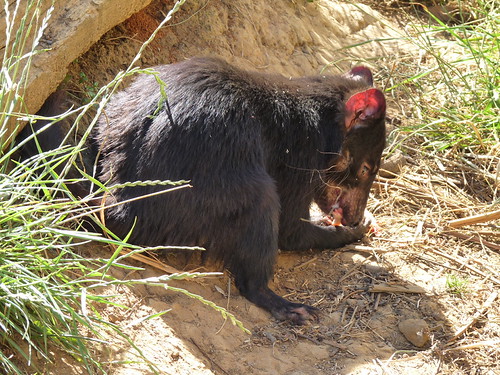
The feeding (fresh wallaby on the menu) was a noisy affair, with the cubs running around with the food, then fighting over it. The devils’ sharp teeth are capable of chewing through up to about 8 cm of bone and mum was soon at work on a nice peice. In the wild the devils prefer roadkill to actually trying to chase down and kill their own prey. In fact, they are quite a lazy animal, also prefering to take over old wombat dens rather than create their own.
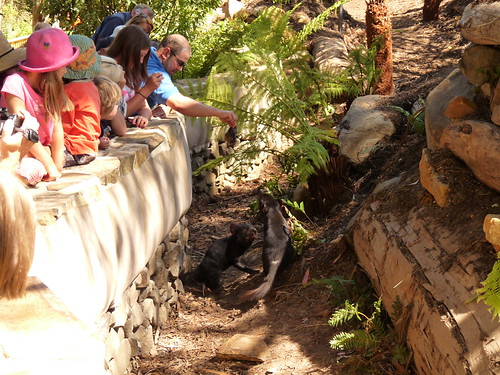
Although normally nocturnal, the conservation park feeds the devils during the day so visitors can see them running around rather than just sleeping, important since all their funding comes from tourism. They feed different devils at different times to stop them becoming expectanct of food and also do things like hiding food around the pen and moving things about.
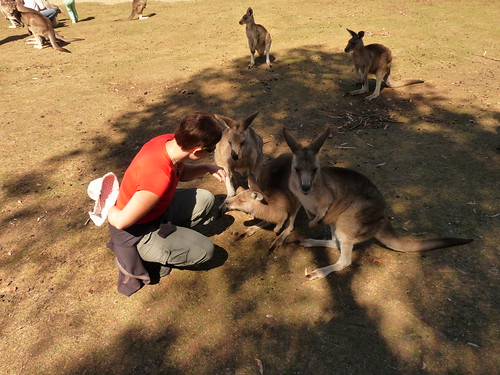
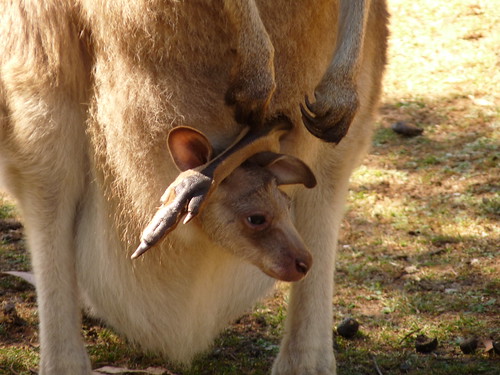
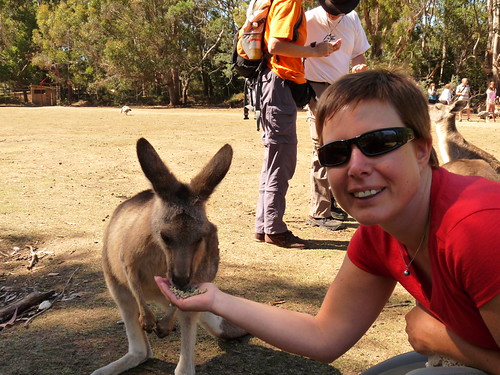
After the devil feeding, it was the turn of the kangaroos and wallabies. We walked to a large enclosure at the far end of the park which contained about 20 kangaroos and wallabies, all bred in captivity and unable to be released into the wild. Here we were able to grab a handful of food and feed these gentle creatures which were just like great, big, docile rabbits. There were Forrester Kangaroos and Bennets or Red-Neck Wallabies in the enclosure which are native to Tasmania, along with Pademelons and some very boisterous geese. One of the wallabies had a joey in the pouch which was starting to get a little bit big and had one leg hanging out which looked mighty uncomfortable!
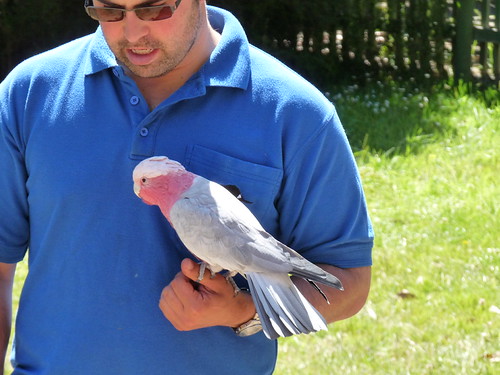
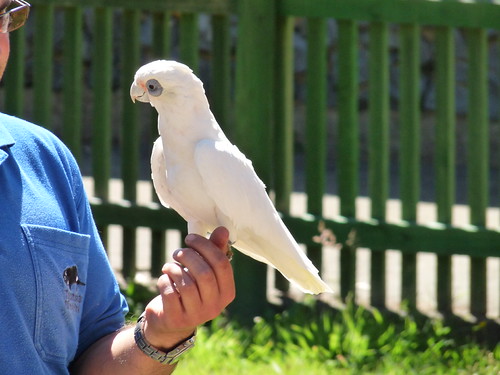
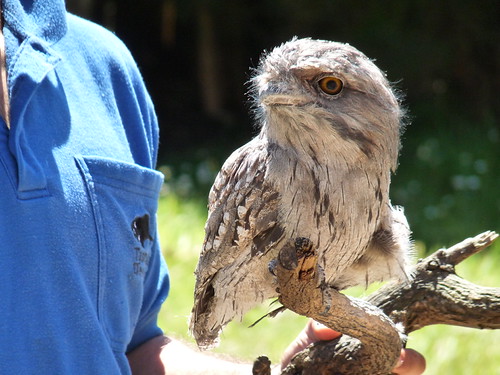
The conservation park also takes care of some birds which have been brought in for various reasons. We were introduced to a Galah whose owners had gone overseas, and a Crennella who had become too much for the owner to handle. Toccy the Crennella flew into the croud collecting held out dollar coins and returning them to his handler (they were returned after the show), quite obviously a highly intelligent bird. These two were followed by Kermit, the tawny frogmouth who had been camoflaged in a tree while the other two birds were out. Another injured bird with a broken wing, he’ll never fly again and so has been given a home at the centre.
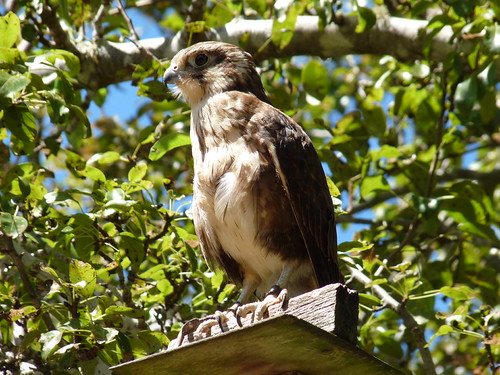
The next bird we saw was a Perigrine Falcon, the fastest animal in the world. Unfortunately this one had had an unfortunate meeting with a powerline and lost one of its wings. The final bird was a brown falcon which had been brought into the centre as an orphan and because they are not allowed to work with live prey, it could not be taught how to hunt and therefore has to stay at the conservation park.
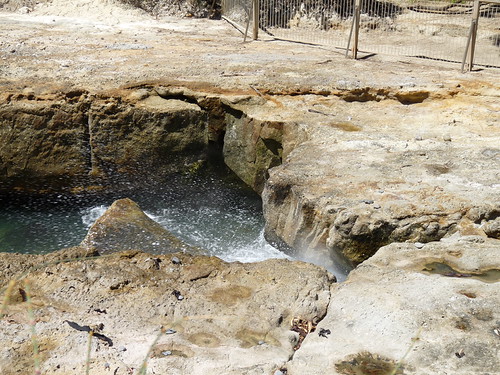
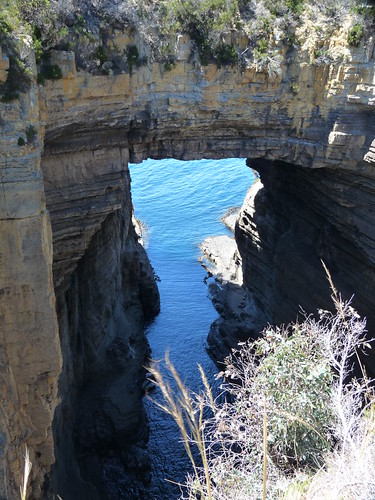
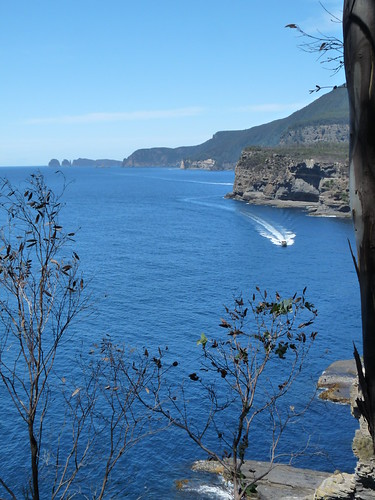
By this time, we had been at the park for about 2 hours so we got back in the car and continued on to Eaglehawk Neck, the site of the infamous convict ‘Dog Line’. This was a line of savage dogs prevented any convicts escaping from Port Arthur across this narrow strip of land. Here we visited the Tasman Blowhole which was a little subdued due to calm seas. We walked to a viewpoint over the cliffs and then went on to the Tasman Arch and the Devil’s Kitchen, a dramatically steep gash in the coastline caused by errosion of coastal caves.
Our port of call for this evening was futher up the coast at Bicheno, a busy crayfishing and abalone port. It had a pretty waterfront and small township, but for us was really just a base for exploring the Freycinet National Park tomorrow.