
12th November 2009
It’s very difficult to spot a Kiwi (New Zealand’s national bird) in the wild. Not only are they nocturnal and shy with a wicked sense of hearing and smell, but they are also severely endangered. The population is currently declining so rapidly it is halving in size every ten years and the Kiwi could be close to extinction by 2015.
This flightless bird survived millions of years and developed defenses against other birds that preyed on them. However, these defenses were useless against man, who in the past hunted Kiwis, and the preditors he introduced such as stoats, rats, cats, dogs and possums which tarket kiwi and their eggs while wild pigs dig up their burrows.
In probably our only chance to actually see a live Kiwi, today we visited a conservation project called Kiwi Encounter.
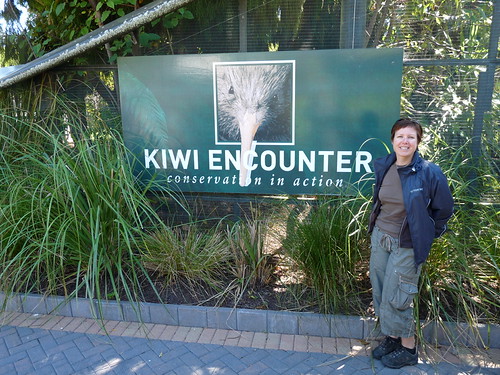
Here, we were taken on a wonderful guided tour of the facility that is at the heart of the “Operation Nest Egg” programme. This programme removes Kiwi eggs from the nest and uses artificial incubation to hatch the chick. The chicks are then reared using as little human intervention as possible before being placed in a purpose designed outdoor enclosure which simulates their natural environment. Once the chicks have grown to weight 1kg they are released back into the wild (after 30 days in quarantine). The bird is taken back to the same area the egg was taken from and its progress monitored.
Although it seems as if man is again interfering with nature we learned that without the aid of this project, the Kiwi would certainly die out. The success rate for the survival of young Kiwi released back into the wild as part of this programme is 60% as opposed to 5% for those left in the wild without human intervention. Alongside this programme, the Department of Conservation also undertakes projects to destroy pests which threaten the Kiwi such as stoats, possoms and rats but these species are rapid breeders and difficult to contain, so Operation Nest Egg is vital.
We were taken through for a look at all the rooms in the facility, from where the eggs first enter and are weighed and their details such as where the egg is from recorded right through to the area where the young chicks are fed and then onto the purpose built enclosure which is all dark and where we actually got to see Kiwi’s foraging around for food as they would do in the wild. Unfortunately there was no photography allowed throughout the tour so as not to alarm or disturb the birds, but it certainly was a privilaged experience.
The programme receives very limited government funding (only about a few hundred dollars per chick) and so is run as a not for profit organisation and gets funding from charities and of course ticket sales and sales from the souvenir shop. Since it takes $3000 to raise 1 chick this is an uphill struggle to save these queer little birds, hugely important in Maori culture, from extinction. They also run adoption schemes where you can adopt a bird, which several businesses have done.
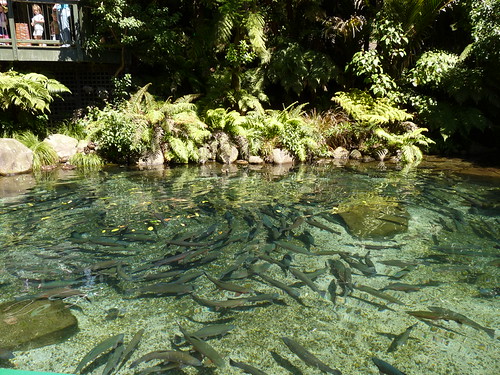
Next door to the Kiwi Encounter is the Rainbow Springs Nature Reserve, devoted to native wildlife and built around the natural springs. On entering the park the first thing you see is the Rainbow Pool, fed by one of these springs. Through the crystal clear water it is easy to spot the 300 or so wild Rainbow Trout which are free to come and go. These are not native to New Zealand but were introduced from North America. We also learned that the only way to enjoy New Zealand Rainbow Trout (and they certainly looked tasty!) is to catch one yourself since it is illegal to sell them, so they never appear on any restaurant menu!
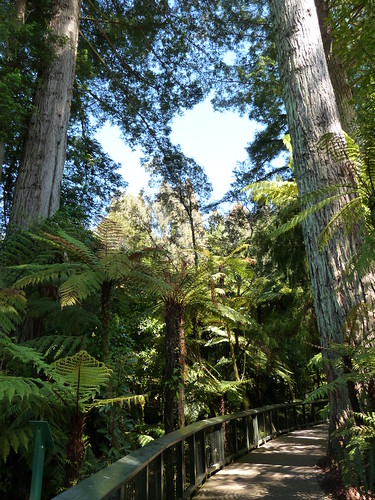
As we walked through the park we wandered among areas of native bush which include tree ferns, kauri and Rimu including the ubiquitous silver fern. There are also Redwoods that have been planted and which grow faster here than in North America because of the volcanic soil and high rainfall.
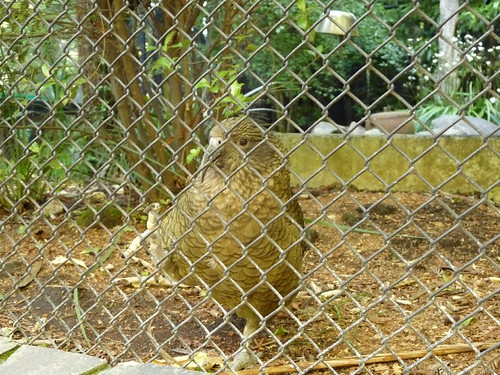
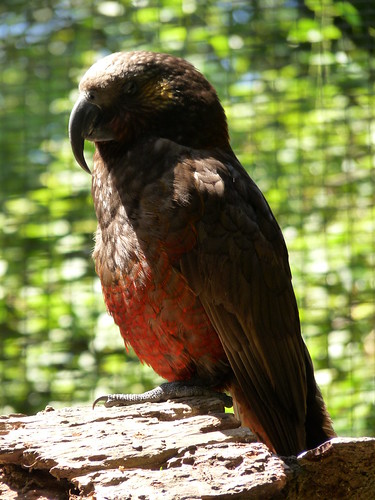
Then we explored the walk through aviary which was home to some native canopy birds such as the Tui, the native woodpidgeon or Kereru and the Kaka.
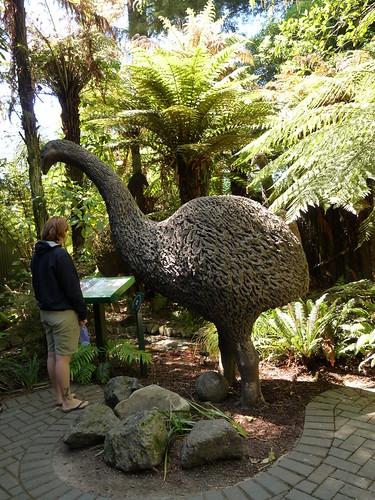
We also walked past this carving of a Moa, which is now extinct. They belonged to the same family as the kiwi, were flightless and unable to protect themselves against the first humans who migrated to New Zealand and hunted them for food. The closest relation to the Moa is the Emu.
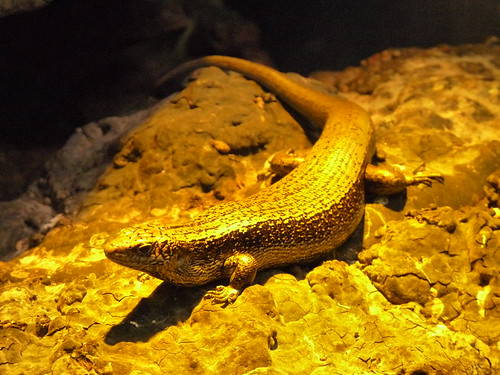
Next up were the reptiles, Geckos and Skinks, very cute and able to lay, incubate and hatch their eggs inside their bodies and unusally for reptiles give birth to live young. Also the pre-historic Tuatara which pre-dates the dinasaurs.
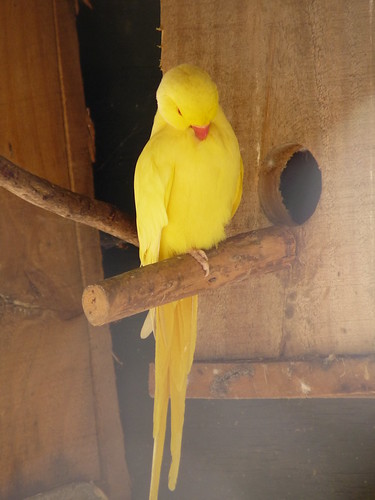
Finally was a trip to Fairy Lawn to see the introduced species such as rabbits, sheep, pigs and introduced birds such as the Rainbow Lorekeet and Lutino Indian Ringnecks.
Nothing could top such an amazing morning, surrounded by this native wildlife and actually seeing Kiwi chicks being fed and Kiwis foraging for food, so we headed for Katikati, our stop for the evening where we have a wonderful self contained unit in the middle of an Avacado orchard, with ripe avos hanging from every tree (they are due to be harvested next week!)